
Mangrove Ecosystems and their Superpowers

In recognition of International Day for the Conservation of the Mangrove Ecosystem, which is celebrated annually on July 26. The Dominican Republic is blessed with some amazing mangroves. You can take boat trips or try out snorkelling to see them in all their glory. But, mangroves aren’t just cool to look at. They have real eco superpowers. As plants that straddle the land/ocean border, mangroves play an important role in maintaining coastal and marine life. No wonder they’re nicknamed ‘roots of the sea’. Researchers reckon they form one of the most useful ecosystems on Earth. ‘If there is a last line of defense against climate change, it may well lie in the mangrove trees that cling to coastlines throughout the tropics.’ – Aulani Wilhelm, VP of Oceans Here are 5 things you need to know about these surprising super-trees: 1) Mangroves inhale carbon Mangroves are the best carbon absorbers in the world. They store up to 10 times more carbon per hectare than forests on land. The flip-side of that fact is that mangrove deforestation is even worse, as the trees release many times more carbon, too. Destroying one tree contributes far more emissions than a newly planted tree can take in, which is why protecting existing trees should be prioritised. Mangrove ecosystems are key to fighting climate change. 2) Mangroves are Nature’s flood defenses Mangroves play a crucial role in holding tropical coastlines in place. The forests protect coastal communities from storm surges, beach erosion, and rising sea levels. The mangrove’s woody, complex structure dissipates the force of incoming waves, and can reduce wave height by up to 90%. Smaller waves means smaller chance of natural disaster devastation. Their roots bind and build the soil, which builds up the coastline and buffers against rising sea levels. The roots also filter water and trap sediment which might otherwise damage coral reef ecosystems. Mangroves are pretty amazing. 3) Mangrove forests are home to a buzzing biodiversity Mangroves provide a protected habitat for a huge range of land and marine life. Many endangered species take shelter here, such as the hawksbill turtle and the Bengal tiger. Yes, tigers need mangroves. Corals seek refuge in mangrove ecosystems from ocean acidification. A study even showed that corals that grew up in the shade of mangroves were more resistant to deadly bleaching. Coral is a super important species to protect. Migrating birds rely on mangroves as stop-over points on their journey. Mangroves act as a nursery ground for many young fish and crustaceans. Through the sediment trapping and filtration they perform, mangroves support nearby ecosystems and all their wildlife. I’m sure you get the picture. Mangroves are relied upon heavily by a lot of wild creatures. Like a mother-of-four. 4) Mangroves are under threat Mangrove forests are resilient. Tropical storms, constantly changing tides – they’ve gone through a lot. But, today, mangroves are under threat nearly everywhere because of human activity. They are disappearing even faster than inland forests, but receive little media attention. We’ve lost 50% of the world’s mangroves in the last 50 years. In Myanmar, mangrove deforestation is occurring at four times the average global rate. The main culprit: shrimp farming. In countries like China, Thailand, and Indonesia, mangrove forests are cleared to make room for shrimp pens. These farms are temporary, but toxic biowaste makes the area uninhabitable once the pens are removed. Some countries are trying to conserve their mangroves, but replanting efforts often lack specialised knowledge about which species to introduce to a region. After the 2013 typhoon in the Philippine, there was a big mangrove reforestation attempt but, sadly, many ill-fitting trees died. Other threats to mangroves come from agriculture, tourism, overfishing, and changing sedimentation due to dams and irrigation systems. At the current rate, mangroves will be gone by 2100. For more information on the threat to mangroves and what is being done to save them, check out the work of the Global Mangrove Alliance and the Mangrove Action Project. 5) Mangroves are highly profitable for humans Many people who live in coastal communities rely on mangrove ecosystems for their livelihood. Mangroves contribute to food security by supporting fisheries, and producing other products like honey, algae, fruit, salt, and leaves for livestock feed. The trees aid in water purification and detoxify waste. Their timber can be used in construction. The trees also provide economic value in the coastal protection they provide. As part of a wider disaster prevention strategy, mangroves add millions of dollars’ worth of protection. They save money in reduced damages from flooding and saving lives. Many would argue that we need mangroves to survive the threat of climate change. The continuation of human life on Earth would be a pretty significant contribution from the mangrove tree. Mangrove Quick-fire Facts The magical mangrove tree: Stores up to 10 times more carbon than terrestrial forests Has waxy, oval-shaped leaves that excrete salt Has aerial and salt-filtering roots Grows in 136 different countries on 4 continents Is found between the latitudes of 32º N and 38º S, along the coasts of Africa, Australia, Asia, and the Americas Ranges in size from small shrubs to 40m trees Has at least 70 species, maybe up to 110 Covers over 150,000 sq km globally, an area slightly larger than Nepal Indonesia has the largest area of mangroves at 23,000 sq km, followed by Brazil, Australia, Nigeria, and Mexico
Dominican Cacao and Chocolate

In celebration of World Chocolate Day on July 7. The Dominican Republic is well-known for exporting goods like rum, bananas and coffee. But did you know that chocolate giants Lindt, Guylan, Valrhona and Nestle all use Dominican cocoa in their products? In 2015, Dominican exported cacao brought in US $261 million, ensuring the country’s spot as one of the leading exporters of organic products in the world. Some international chocolate brands are now choosing to partner with small farms in the Caribbean so they can experiment with the whole process of making chocolate, bean to bar. They want to create new flavour sensations and tinker with methods to discover new ways of making great chocolate. Apparently, when the cacao plant is grown in the shade of other plants, the beans take on hints of the fruits around it. It’s a natural way to experiment with flavours. As you can imagine, it’s popular with the organic, pesticide- and fertiliser-free market. Chocolatiers are keen to control how the cocoa beans are processed at small-scale farms. The rate at which the beans are oxidised and fermented affects the flavour profile of the final product. From Cabarete, you can take a fun day trip to learn all about chocolate at one such farm, Hacienda La Esmeralda near San Francisco de Macoris. It’s a two-hour drive from eXtreme, heading eastwards and inland. The El Sendero del Cacao tour is a family-friendly tour of the cocoa farm and chocolate factory. Touring the farm, you’ll learn about how the pods are harvested and split, and then how the beans are extracted, fermented and dried. In the factory, you’ll see how the bitter cocoa beans are transformed into chocolate delights! You may even have the chance to make your very own chocolate bar. There is also a cocoa plantation in Santo Domingo where you can be schooled in the art of the chocolatier. There are various artisanal chocolate shops where you can experience the variety and rich flavours of Dominican chocolate. There is a growing artisanal chocolate movement in the Dominican Republic, with the increasing demand from international consumers for ethically and sustainably produced organic goods. But, Dominicans are more commonly seen sipping creamy hot chocolate for breakfast than snacking on a solid bar. The Caribbean heat makes it difficult and expensive to produce and store chocolate. It melts! Instead, on your vacation, why not indulge in a Dominican treat. Traditional hot chocolate is made with unsweetened chocolate blocks, evaporated milk, sugar, and spices like cinnamon and ginger. It is a truly magical way to enjoy the fruit of the cacao plant.
Are you aware of the Benefits of No Air Conditioning?

The hotel is not air-conditioned on purpose The Yoga Loft features a beautiful open-air deck overlooking the sea, connecting you with the earth, the wind, and the water. The fresh air and the view make the experience unique, and the yoga sessions truly inspiring. This level of connection with nature is the overarching theme of our hotel that aims to facilitate a deep understanding of yourself as part of the natural environment. For these reasons and more, our hotel does not have air conditioning Eco-conscious decisions We run an eco-friendly hotel, and we make very conscious decisions towards the protection of the local ecology every step of the way. The hotel is solar-powered, and we ensure that all our facilities have a minimum environmental impact. We even operate an organic farm based on a permaculture system with modern aquaponics and water management systems. Most of the food we serve comes from our local farm in alignment with the most sustainable practices. We say no to air conditioning Other than lowering the temperature and the humidity in the room, air conditioning units don’t do much good to you, or to the environment. Compare the sound of air conditioning to the sound and feel of an open window. With accommodations located so close to the sea, it would be a shame to block out the sea breeze and breathe the artificial coolness of the unit. Plus, energy consumption and the level of noise go through the roof. You can open the windows and take advantage of the temperate breezes straight from the sea. Overall benefits of no air conditioning Conservation of energy Air conditioners use a lot of electricity, which is causing environmental pollution due to the production of power. Because a large percentage of electricity globally is generated by coal-burning plants, air conditioning contributes to the release of pollutants, such as greenhouse gases. It is a hopeful fact that 195 countries have signed an agreement to cut emissions of hydrofluorocarbons (HFC), a planet-warming chemical usually used in air conditioning units and refrigerators. This initiative is widely known as the Paris Accord and is a good start for the planet. Prevention of Respiratory Problems and Allergies The sudden change in temperature and humidity when a room is air-conditioned artificially is often aggravating the symptoms of various respiratory diseases. The air circulation can even transmit such diseases. Air conditioning is linked with chronic rhinitis, throat irritation and hoarseness, and increased risk of asthma attacks. Furthermore, airborne dust and fungi can cause allergic reactions. Increase flexibility and skin suppleness Did you know that the warm tropical air of the Caribbean is perfect for yoga? The body and the ligaments are more flexible, and the increased temperature prepares the body for the session. Air conditioning in the rooms would ruin that effect. Plus, it would cause dryness and irritation on your skin and mucous membranes, such as your nose and eyes. Contact lens wearers often encounter problems in air-conditioned spaces. So many retreat choices We have created a welcoming space for everyone who wants to escape the hectic rhythms of daily life and retrieve balance and tranquility. At the Yoga Loft, you can choose among a selection of retreats that include yoga and surf or fitness, or even aerials and flying trapeze. Whichever package you choose, you are guaranteed a unique opportunity to reconnect with yourself, become one with your natural surroundings, and feel strong and fulfilled. References United Nations Climate Change, The Paris Agreement, https://unfccc.int/process-and-meetings/the-paris-agreement/the-paris-agreement Hunker, Advantages & Disadvantages of Air Conditioners, https://www.hunker.com/12003907/advantages-disadvantages-of-air-conditioners Only My Health, Disadvantages of Air Conditioning, https://www.onlymyhealth.com/health-slideshow/disadvantages-of-air-conditioning-1415193542.html Global News, Top 5 health problems associated with air conditioning, https://globalnews.ca/news/258330/top-5-health-problems-associated-with-air-conditioning/
Horseback Riding Tips in Cabarete

Riding around the countryside on horseback, you’ll get a totally different experience of the Dominican Republic. It’s a great chance to pull yourself away from the familiar comforts of your hotel in Cabarete and try something new. There are several places in Cabarete and a little outside town that are trusted sources of healthy, happy horses. I’d recommend you use one of these, even if it means paying a bit extra for your horseback riding adventure. Sadly, you might see some horses around town that don’t look up to the job of carrying a rider. Please don’t ride a horse that looks malnourished, has dull or clouded eyes, or a patchy coat. Play it safe, if in doubt. It’s not worth adding to these animals’ suffering. Luckily, there are three reliable sources who board plenty of well-treated horses you can ride. Make sure you negotiate the price knowing exactly what’s included. Often there’s the option to add a taxi to come pick you up from your hotel and a Dominican lunch. After all, what’s a horseback ride through the Dominican countryside without a massive plate of rice and beans? Sea Horse Ranch Sea Horse Ranch is Cabarete’s equestrian centre. They offer guided tours around their stunning network of bridle paths and private beaches, as well as lessons for all ages and abilities. They board a selection of Paso Finos, Tennessee Walkers, Quarter Horses, Thoroughbreds, and ponies. You’re sure to find a horse to suit your needs. Riding, show jumping, horse care, dressage – Sea Horse Ranch do it all. You’ll find it a short drive outside town, heading towards Sosua. It’s very visible from the road. Rancho Luisa y Tommy Tommy Bernard grew up on the island, riding horses. The Rancho has been operating tours since 1985. It’s a little way out of town in Sabaneta de Yasica. Their 22 horses are beautiful and healthy animals, given plenty of space and love. They offer a few different styles of tours through mountains, rivers, villages, and beaches. As well as full- and half-day tours, Tommy can guide you on a special sunset or full moon ride. These are quite spectacular, especially if your ride is joined by bright fireflies! If you’re feeling really adventurous and want to dedicate a few days to exploring the island on horseback, the Rancho can arrange longer trips, where you stay overnight in little mountain cottages. Iguana Mama Iguana Mama are an adventure company that do all sorts of tours, including horseback riding tours. They offer half-day and full-day outings. Half-day tours last 3-4 hours and you can choose your flavour: ‘Beaches and Villages’ or ‘Mountains and Rivers’. The full-day tour lasts 7-8 hours and you will get the full mountain/river/beach experience. Sore bum comes included on this mammoth tour! Horseback riding tour top tips: Wear long trousers or pants, and closed shoes. You don’t want to lose a flip-flop in the river! Fair-skinned friends, don’t forget sun protection! You can ask the guide beforehand how shady the tour will be, so you can judge how to stay safe in the sun. You can also arrange tours in the morning or evening to avoid the full glare of the Caribbean mid-day sun. Bring small change and coins for snacks. This especially important if your tour does not include lunch. You can likely stop at colmados for a bite to eat or drink. Wear a bathing suit underneath your riding gear for swimming in the river. On a hot day, it’s a beautiful way to cool off, so don’t miss out! Bring enough water. Breathe deep and take it all in: sounds, smells, everything!
Birds of the Dominican Republic

Maybe you’re taking a break between kiting sessions. Maybe you came to the beach to work on your tan. Whatever the reason, there’s usually some time to spare on the beach in Cabarete. While you soak up the sun and enjoy the peaceful sound of the ocean, why not enjoy a little light birdwatching? I am not an avid ornothologist, but I do love the feeling of being able to successfully identify a passing bird. Even if it’s just a crow or a species of finch. Here are some of the most common birds you’ll see around Cabarete. Who knows, you might just impress all your friends with your expert local bird knowledge. This stuff comes in handy. Palmchat Where better to start our bird journey than with the Dominican national bird? The Palmchat, Cigua Palmera in Spanish, is only found on the island of Hispaniola. That’s right, you won’t see this little guy anywhere else in the world. Palmchats are cheerful creatures, full of song and chatter. They tend to hang out at the tops of palm trees, hence the name. They are small, around 20 cm long, and have a distinctive olive-brown colouring, streaked with brown and cream. Their eyes are red and their bills are yellow. Palmchats are very sociable, and live in family groups. Their nests can be quite large and intricately designed with rooms and passages. Different ‘rooms’ are sometimes joined together to create a structure up to 2 metres wide! Keep an eye out for their homes while you sip piña coladas on the beach. Hispaniolan Lizard-Cuckoo Another species found only on Hispaniola is this striking Hispaniolan Lizard-Cuckoo. This bird has pretty distinctive plumage. The long, white-tipped tail and reddish-brown patches under the wings make it stand out from the rest. It’s about 45cm long. If you don’t see it, you might hear it first. It calls in very sharp, staccato way. Some have described it as grating. Sorry, cuckoo. Though this cuckoo mainly hangs out in the forest canopy, it likes to chase lizards and other small animals around the forest floor for its dinner. Antillean Palm-Swift The Antillean Palm-Swift is a small swift with easy-to-spot black and white markings. It is mainly black on top and white underneath, with a black breast band. This little swift is mainly found in Cuba, Hispaniola and Jamaica, but it has been known to wander as far as Florida. Palm Swifts hang around in colonies of about thirty pairs, and often live around urban areas. They are also pretty common in sugar plantations. They have quite a weak, twittery call. Not surprising, since they are only around 10-15 cm long. Palm-Swifts fly very nimbly and quickly. They are though to tbe one of the fastest fliers of their size. You may see them showing off in the air, doing twists and turns. Vervain Hummingbird This little cutie is a Vervain Hummingbird. Considered the second smallest bird in the world after the bee hummingbird, the Vervain is around 6cm long and weighs just 2g. It is so small that you might mistake it for a bumblebee! Look out for its metallic green feathers on its back, and its hovering flight patterns. They also turn their head to the side when singing. Adorable. Hummingbirds are amazing fliers. They are the only birds on Earth who can spin their wings in a circle, allowing them to fly forwards and backwards, up and down, and side to side. Oh, they can also hover. They have freaky high metabolisms. Hummingbirds have the fastest heart rates (1,200 times a minute in flight) and highest body temperatures of any animal in the world. This means they burn a lot of energy, and have to eat and drink very frequently. Like, every 10 to 15 minutes. (Gosh, I wish I were a hummingbird right now.) They drink eight times their body weight every day. In a day, humans eat about 26 calories per kilogram. When hummingbirds are bulking up for migration, they will eat 14,000 calories per kg every day. That’s just insane. I’m around 60kg, so that would be the equivalent of me eating 840,000 calories in a day! Broad-billed Tody The Broad-billed Tody, or as I like to call him ‘The Joker’s Style Icon’, is a little but chunky, brightly-coloured bird who likes to make a lot of noise. Todies have very distinctive plumage. The bright green top, white and yellowy underneath with pinkish sides, and sharp red throats make it easy to identify when birdwatching. The narrow-billed tody lives on the island, too, but lacks the yellow streak on the front. They tend to hang out in the mountains, whereas the broad-billed bros stick to the low land. They love to chatter away, as they bob around on branches, and make a terp terp whistle-like call. They can also make a noise with their feathers that sounds like running your finger along the teeth of a comb quickly. You’ll hear that a lot in mating season, which is April to July. Todies don’t migrate, and like to stay close to their home nest, even when they’ve grown up. Aww. El Choco National Park If you’re keen to see some tropical birds, El Choco National Park might be one for the holiday list. There are guided bird trails, where a local expert will take you around the unmarked trails of the park and teach you all about Cabarete birds. El Choco is just a short moto ride from the centre of Cabarete, down the Callejon de la Loma. Here, you’ll find 77 square kilometers of limestone hills, lush forest, small farms and pasture land. You’ll also find lots of birds to spot. It’s recommended that you go to El Choco with a guide for your first time at least, as there aren’t good maps of the trails and it’s really easy to get lost. In the heat, this is a bad idea, and could turn your dream vacation into a nightmare. Best appreciate
Mount Isabel de Torres
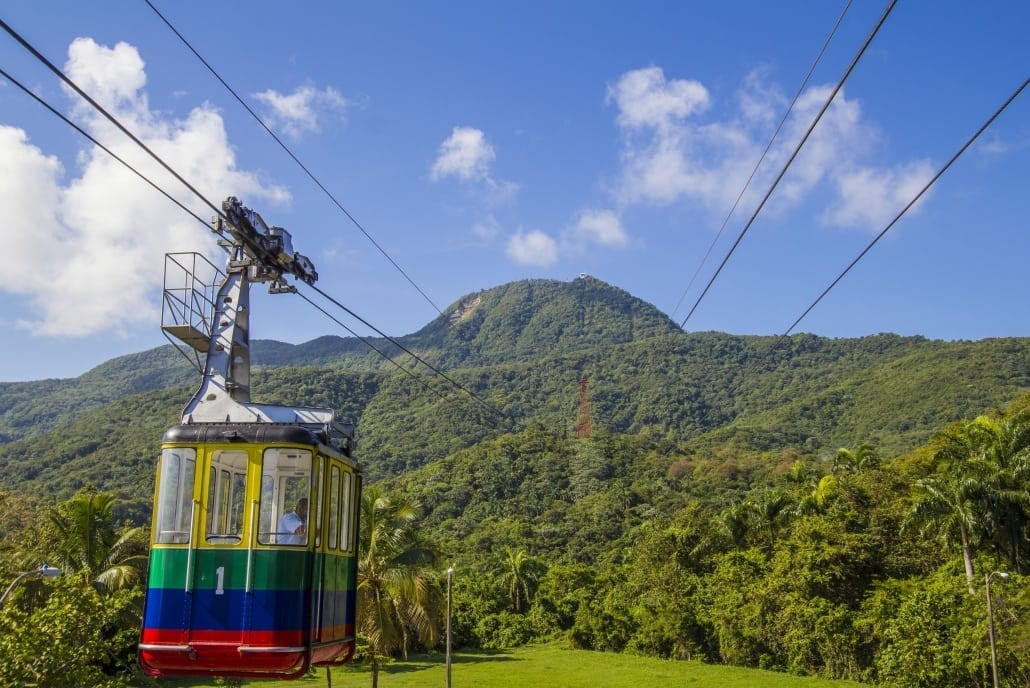
If you’re up for a scenic adventure, you might consider taking a day trip out of Cabarete to hike up Mount Isabel de Torres! The mountain stands at 793m (2,600ft) above sea level in a national park just southwest of Puerto Plata, which is less than 30 minutes’ drive west of Cabarete. While most people only go straight to the top, the whole area is a beautiful protected nature reserve and worth a look around. Not up for a sweaty hike? It’s all good, you can jump on the only cable car in the Caribbean and ride all the way to the mountain top. The views from the top are stunning. The unspoiled Dominican greenery, the city of Puerto Plata, tropical beaches, the ocean, a giant statue of Christ the Redeemer. Some pretty botanical gardens, too. Keep your eyes pealed for hidden treasures up on the mountain. There are many obscured caves, with streams and natural springs that flow through the mountain. Bright tropical flowers grow wild and there are plenty of species to spot from the thriving animal life. Go on, explore! There are some homely Dominican restaurants around the area, so don’t worry about making a proper trip of it. History Lesson on the Mount The open-armed Christ the Redeemer statue was mounted on an old dome-shaped fortress in 1970. The fortress had been built to defend the city against intruders, as an early alert for potential threats. It was designed to blend into the mountain: its domed roof would be covered in grass to camouflage the fortress, and make it look like a plain old hill. It didn’t all go according to plan for President Trujillo, though, as the lookout didn’t really work. Frequent cloud and fog in the region meant that visibility was low, taking the ‘look’ out of ‘lookout’. The fortress was soon out of action. It was a brainwave from architect Cristian Martínez to turn the failed defense project into a tourist attraction with a cable car ride. The panoramic views from the top could still be appreciated, if not for military strategic purposes. Construction began in 1972 under President Joaquin Balaguer. The cable car structure was finished in 1974, and opened in July 1975 after several months of test runs. It was a pretty big deal as a Caribbean nation had never embarked on such a project before. The cable car, ‘El Telerifico’ in Spanish, is thus a major point of national pride for the Dominican Republic. The botanical gardens were developed in 1973 by a engineer called Benjamín Paewonsky. Exploring the area Cabarete has so much to offer, it sometimes feels like you could be entertained here forever. With the watersports, beaches and lively, rum-fuelled party spirit, you probably could. But, taking a day trip to explore a little wider can give you a fuller insight into Dominican life and the variety of natural beauty on the island. Talk to our friendly concierge staff at eXtreme. They have all the local knowledge to help you with arrangements for your day out of town.