
Ultimate Cabarete Beach Guide
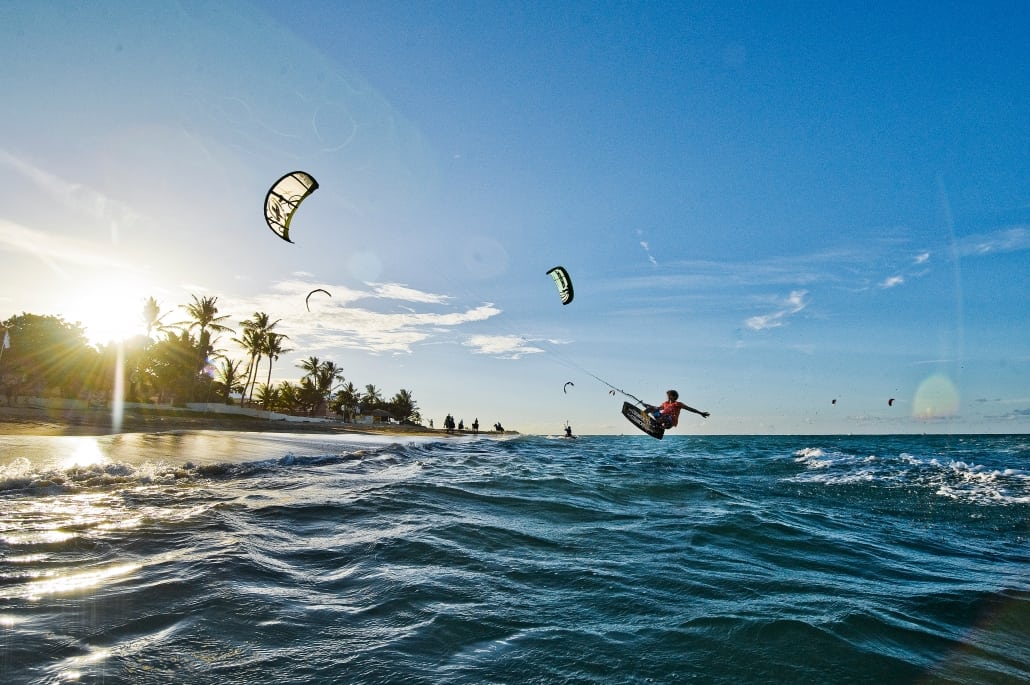
Cabarete is a world-famous watersports hub, so it’s no surprise it has some pretty amazing beaches. If you’re an active person looking to get the most adventure out of your vacation, this might just be the place for you. Cabarete is a small town with a big personality. It’s located on the North coast of the Dominican Republic, near Puerto Plata. Here’s a run-through of the best spots to kite, surf, windsurf, SUP, and swim! We’ll start at Cabarete Beach, the longest beach by the center of town, and work our way downwind. Cabarete Beach This is the most bustling beach in Cabarete, sporting many restaurants and shops, as well as the best wind on the island. In Cabarete, we are blessed with side-onshore wind, so it’s safer to be out on the water and ideal for beginners. You’ll find plenty of kite schools here, with instructors eager to show you the ropes and get you feeling confident. Windsurfers tend to hang out upwind on Cab Beach, because of a wind pocket. Kiters ride along the middle of beach, but be aware as it does get choppier as you move away from the point (near Janet’s supermarket). Crack out your SUP before the wind picks up, which is usually shortly after 11am. If you’re not into watersports, there’s lots of space to relax on Cabarete Beach. You can top up your enviable Caribbean tan, dive into a book, or strike up a conversation with a fellow sun-worshipper. And, of course, be sure to spend at least an afternoon sipping coconut water and mojitos until sunset. Bozo Beach Bozo is so named because it’s where you end up if you’re a beginner (or bozo) kiting on Cabarete Beach. That said, it’s a great place to be out on the water. So good, in fact, that this is where the pro kiters gather to show off their best tricks at competitions. There’s plenty of ocean space when you get out, though you sometimes find a bit of shore break and some chop. Bozo’s nearby reef is popular with kiters on directional boards. On a low-wind day, you’ll see confident bodyboarders and bodysurfers having fun at Bozo. Punta Goleta Punta Goleta is a calm place to soak up the sunshine away from the crowds. It’s a popular place for skimboarders to play around, and you can enjoy their antics from the beach. Kiters tend to steer clear of this area because of choppy waters and proximity to Kite Beach point. You can easily get yourself into a bad situation here, if you’re struggling to relaunch your kite, and drift toward the rocks near the point or the shallow reef. Not for beginners. Kite Beach Right on our doorstep, mere footsteps from La Mesa Taina restaurant in eXtreme, is the world-class Kite Beach. As the name suggests, this beach is a kiters dream. Perfect wind conditions on over 300 days a year, gorgeous sand, warm bright-blue water – if you’re lucky, you might even see turtles swimming around you when you’re out on the water! eXtreme guests enjoy prime access to Kite Beach, so you can be the first on the water when the wind picks up! We also have a grassy area where you can hose down and pack up your kit, away from the sand. You can store your kit just a few steps off the beach, and head straight to our farm-to-table restaurant to refuel. It doesn’t get more convenient than that. There are a good few kite schools around on Kite Beach, with skilled, experienced instructors to help you on your way. Safety tip: If you’re going around the point, be sure to give it a wide berth, since there are a good number of rocks. You’ll find the flattest water just downwind of the point. It’s common to see locals spear-fishing at the point, too. Kite Beach in the early morning is a magical place to be. Take a dip or have a paddle out on the glassy water. Experienced paddlers can find some paddle surf waves out on the reef. At eXtreme, The Yoga Loft is a serene space that looks out over the water. Join us there for morning practice to ground yourself before an active day. Mats and blocks are provided, so don’t worry about bringing your own equipment! Playa Encuentro Encuentro is THE place to rise and surf in Cabarete. Just a 5-minute moto ride from eXtreme, it’s a must-see if you’re a looking to catch some waves in the area. The variety of breaks makes it an ideal spot for surfers of all ability levels. First-timers can keep their cool in the Beginners’ Area (between Pauhana and Bobo’s), where mellow waves and helping hands abound. Seasoned experts can test their skills in the Destroyers or Coco Pipe breaks. You can rent boards there or bring your own. The guys from Pauhana Surf School are your best choice, excellent equipment and great teachers! Get down there early for a sunrise surf, before the wind and crowds start to build at around 9am. Big waves mean SUPs are not allowed here, and swimming is not advisable. Stick to the board. With 350 surfable days a year, Encuentro is a safe bet for your surfing holiday. Come and join the party! The beach in Cabarete is a year-round outdoor playground for adventure-seekers and ocean lovers, zen beach babes and party animals. As they say, the sun always shines in the Caribbean. Whether you’ve been on the water a day or a decade, you’ll soon feel at home on Cabarete’s friendly beaches.
How to Read a Surf Report

In the olden days, surfers would have to grab their board and head down to the beach to see if there were waves to surf. Using their eyes, can you imagine? Now, with the magic of surf reports, you can get a pretty good idea of what the waves will look like for the next week without having to leave the house. Surf reports are generated using information from sophisticated equipment that tracks variables like the weather and ocean activity. Based on this information, you can model how the wind, swell and tides will behave and get an accurate idea of how surfable the waves will be. Pretty cool. What does a surf report look like? Surf reports take the form of charts, full of numbers that indicate the elements at play. Above, you can see an example of a daily surf report for Playa Encuentro, taken from Magic Seaweed. The chart shows how the the day will progress in terms of wave height, wind speed and direction, swell direction and rating, and weather. How do I interpret the chart? Learning to interpret surf reports to accurately predict what the waves will be like on a given day takes a lot of practice. You need to take note of what the varying factors look and feel like, what it feels like to be out in a medium cross-shore wind at low tide, so you can gain a sense of how the numbers translate into real life. You’ll gradually learn what are the ideal conditions for you to have an epic surf session. It’s all about experience. Having said that, there are some things that will help speed up your journey to becoming the ultimate surf report reader. Swell height and period You might see a wave height of 0.7m on the surf report. While this may seem small, you need to look at the period to know the power of that 0.7m wave. A period indicates the time interval between waves. Technically, it’s the time for two successive wave crests to pass a fixed point. But you can think of it as a measure of how spread out the waves will be. A long period, say of 15 seconds, tells you that the waves are more spaced out and were likely formed in a ground swell. They travel a large distance to get to shore and gain more speed and power on the way. Short periods, say of 5 seconds, mean the waves are likely to be caused by wind from a nearby storm. They haven’t travelled as far and will be less powerful. So, a 0.7m wave height with a 15s period could mean great, surfable waves, whereas the same 0.7m at 5s could spell a weak flop. The swell direction will also affect how the waves come in and break. Wind speed and direction Wind is generally undesirable for surfers. A windless, glassy day is the dream. The best thing to do to minimize wind affecting your surf is to get out early. Wind tends to pick up speed over the course of the day. That’s why in Cabarete we surf and SUP before 10am then switch to kiteboarding and windsurfing after the wind picks up at around 11am. It’s good to have options. As well as the speed, the direction of the wind is important to note when reading a surf report. On shore wind blows from the ocean towards the land. Most often, these are not ideal for surfers, since on shore winds can break up the surface of the water and make it choppy and difficult. It also usually lowers the wave height and neatness. A light off shore breeze, on the other hand, creates much better surfing conditions. Off shore wind blows from the land out to sea, and allows for nicer, better groomed waves to form. The breeze catches the face of the wave and holds off the break a little, so the wave is smooth and is more likely to break in a barrel shape. These are the waves where you can really get slotted. Tides Like werewolves, tides are controlled by the moon. Unlike werewolves, tide behaviour is highly predictable. There are two low tides and two high tides every day. The way Nature’s clock works means that these high and low points will shift forward every day by 51 minutes. Watch out for super high and super low tides under the full moon. In Encuentro, we have a reef break which can feel a little iffy at a very low tide. The water gets shallow and you have to take care when you jump off, as the water level might be lower than your waist. If this freaks you out, watch out for low tide. Some surfers believe it’s best to surf when the tide is on the rise from lower to high because the momentum is coming into shore. This is called a ‘tidal push’. Others are adamant that the ideal tide varies depending on the break you like to surf, and the interplay of other conditions. Generally speaking, if the tide is too high, waves will be slow and mushy, especially if they are not high-powered enough. They will tend to break onto themselves in a slushy mess. If the swell is low, they could end up breaking too close to the beach to surf. If the tide is too low, though, it can suck the power out of the swell, as the water level is too low to carry enough force. It’s a complicated science, and people definitely disagree on how tide affects surfable waves. Get out there! Again, the best thing you can do to become master of the surf report is to get out there and gather experience. Check the numbers, and then go feel out the conditions for yourself. With practice, you’ll get better at knowing when is the right time for you to surf. Remember, you can always consult with the locals. They
Surfing in Cabarete
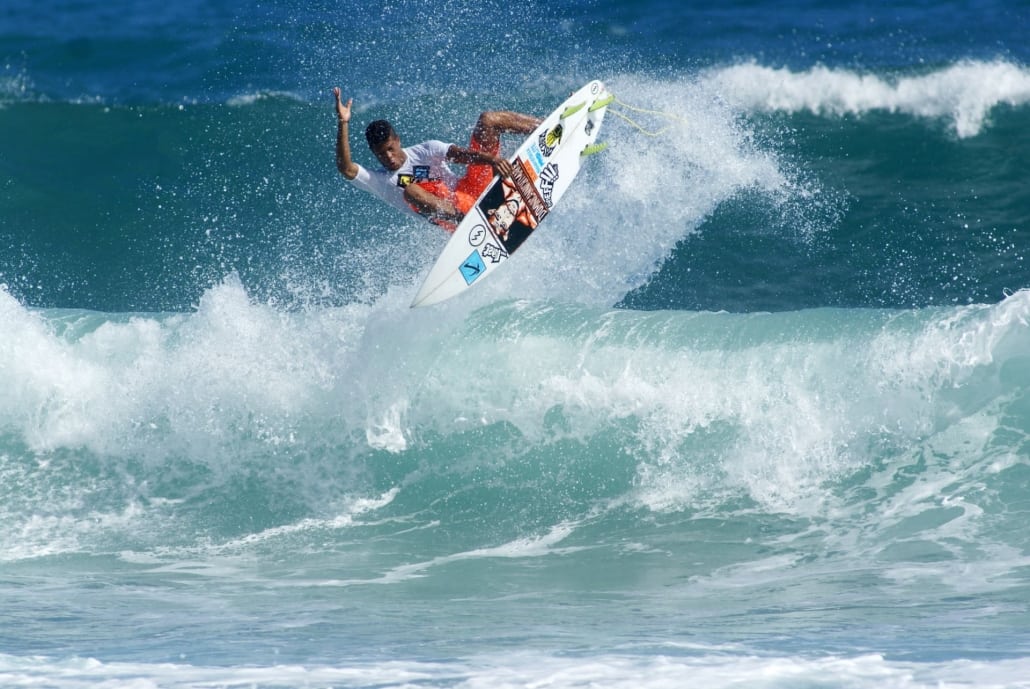
Surfing in Cabarete? But wait, isn’t Cabarete just for kiteboarding? Actually, as well as top-notch wind, Cabarete also has world-class surf all year-round. But, I’ll forgive you for thinking that, just this once. The small beach town of Cabarete on the North Coast of the Dominican Republic is the ideal place for watersports lovers. It boasts amazing wind and swell. You can even SUP in the morning on the glassy water before the wind picks up. Beautiful. Perhaps the biggest draw of Cabarete watersports is the consistency of the conditions. Playa Encuentro gets upward of 350 surfable days a year, while Kite Beach gets perfect wind on over 300 days a year. No matter the season, you can be happy as Larry out on the water. Your best bet is dawn patrol. Get there at sunrise, well before the crowds build around 9am. Encuentro is not suitable for SUPs or swimming, so stick to the surfboard. Beginner Surfers You’d be hard-pressed to find a more ideal place to learn to surf than Playa Encuentro, Cabarete. The shallow waters inside the reef provide perfect conditions to learn to surf year-round. Even in the winter months, you’ll be safe from the biggest waves inside the beginners area. There are loads of surf schools on the beach in Encuentro, and many a helping hand to get you on the board and having a great time. We partner with Pauhana, whose local, certified staff keeps you safe and teaches how to catch every wave! It’ll cost you around $10-14 a day to rent a board, but you can haggle down to a lower price to rent for a week or two. We also offer package deals that include lessons and board rental. Encuentro by Numbers As you can see on the map above, Encuentro has a fair few different areas. You can be sure to find what you’re looking for with so much variety in the reef break. Be sensible and err on the side of caution to stay safe. Don’t head straight for the black diamond breaks if you’re not totally confident in your abilities! Encuentro is a very non-judgmental spot, so don’t be embarrassed to take it easy. We all start as beginners! Weather conditions Temperatures are pretty consistent in Cabarete, and the water is always warm. Definitely no wetsuit needed! A bigger concern here is taking care to top up your sunscreen every once in a while. Many opt for swimwear with shoulder coverage, or even sleeves, especially if you’re fair-skinned. You’ll even see the locals’ faces smeared with thick sunscreen paste or zinc oxide, a natural, ocean-friendly barrier to the sun’s rays. Take care of your skin, surfers. Okay, lecture over. Luckily for us in Cabarete, rainy season isn’t really a concern. Sure, it’s less likely to rain in the summer months, but the weather here can be unpredictable. Showers can happen at any time, and they’re usually short downpours which break into sunshine. In short, the rain in Cabarete won’t ruin your day. You may have heard of hurricane season in the Caribbean. This is not really an issue in Cabarete because we are protected from most major storms by our mountain ranges, including the highest peak in the Caribbean, Pico Duarte. Hurricanes avoid high and large land masses, so the storms tend to ‘bounce’ away from us. Storms are usually only ever good news for surfers, as the northerly swells bring consistently strong waves that pack a punch! When to come? As I mentioned, Encuentro has great waves for beginners all year round. High season in Cabarete is December to around June, so the town is full of bustle. Very different vibe in low season, much more chill. Surfer’s choice! If you’re an intermediate surfer looking to improve your skills, then the May to October reliable waves will be perfect for you. The winter swell builds from November to January, and peaks from January to April. If you’re an expert surfer hunting massive overhead waves, then this is your time. To Cabarete and beyond! As well as carving up the waves at Encuentro, you can test out the waters in nearby El Canal, Mananero and Sosua Bay. These are all great quality surf spots, though less consistent than Encuentro. But, still, it can be fun to mix it up a little! Mananero is best very early in the morning, as surf conditions go awry with any wind. A nice summer surf spot. If you head east down the coast, you’ll find Rio San Juan, Playa Grande and Preciosa. All good spots if you like to adventure out of town a bit further. To refuel, there will usually be Dominican restaurants or informal ‘comedors’ around nearby serving tasty chicken, rice and beans. Note that not everywhere will have board rentals, so be prepared if you want to wander outside town. Surf culture is pretty prevalent in Cabarete. You’ll see a good few surf-themed shops and restaurants, while you’re here, so don’t miss out on this side of local culture. Check out our Lesson in Surf Slang article to prepare for that post-sesh surfer chat on the beach! You’ll be getting pitted in no time.
A Lesson in Surf Slang

Cabarete has gained its reputation as the kiteboarding capital of the world. Our beaches get consistent, world-class wind, and you’ll see loads of kiters and windsurfers at play. You may not have heard that you’ll also find world-class surf in Cabarete. I’m talking about Encuentro beach. The varied reef breaks make Playa Encuentro a great place to surf, no matter your experience level. You’ll see the pros going at it right next to the first-timers! On any surf vacation, it can help to have some fresh vocab to hand. Use it on the beach to chat with fellow wave-seekers, and take it home to impress your friends! Here’s our run-down of essential surf slang, so you can rave about the waves to your heart’s content. Wave Basics Barrel, keg, tube: the tube-like hollow part of a wave Break: when the swell or wave turns into white water Crest: top of a wave Curl: the most powerful part of the wave, the bit that you can see curling over, just before it breaks. Surfers aim to stay as close as possible to the curl Face: unbroken section of the wave Green room: the inside of a barrel. So called because the water is clear and green in there Soup: white, foamy water Types of Wave A-frame: a wave that breaks on the left and right, in the shape of a peak Ankle busters: small waves, too small to ride properly Beach break: area where waves break over sand Bomb: a massive wave Foamies: waves made of white foamy water Groundswell waves: waves that are brought in by storms offshore, making them big and powerful Hollow: a wave that has a great barrel, and surfing in it feels like you’re inside a tube Novelty waves: fun, unpredictable waves that might catch you off-guard. Not technically great, but super fun Nug: a good wave Overhead: a wave that is higher than head height Party wave: a wave that multiple people are surfing Point break: area where waves break around a bit of land that juts out from the shore, often at angles Reef break: area where waves break over rock or coral on the seabed Catching a Wave Aerial: leaving your board and getting some air Bailing: general term for jumping off your board to avoid a bad situation Barrelled, locked in, slotted, pitted, shacked: surfing in the barrel of the wave, surrounded perfectly by the hollow of the curl. All these terms try to express the amazing feeling of getting it just right, so you feel you’re in a cosy home in the wave Carve: a sharp turn or move on a wave Charging: attacking a wave with aggression Dawn patrol: going surfing very early in the morning. A sign of commitment Goofy foot: riding with your right foot forward and left foot back on the board Hang five: surfing with one foot at the nose of the board, five toes hanging off the front Hang ten: surfing with both feet on the nose of the board, ten toes hanging off the front Hang eleven: a surfer who rides naked. I’ll let you do the maths Lineup: the orderly queue of surfers waiting for waves, must be respected Snaking, cutting off, dropping in: taking a wave out of turn, or stealing it from someone else who might have been closer or more deserving of the wave. Bad etiquette Stuffed: pushed underwater by a wave Washing machine, worked, battered: getting rolled around underwater by a wave, generally getting owned by the waves Wiping out, grubbing, heading, mullering: falling off the board while surfing Surfer’s Who’s who Barney: a beginner surfer, an uncool surfer Benny: a non-local surfer, tourist. Not a poached egg on an English muffin, with hollandaise sauce Frube: a surfer who fails to catch a single wave in the whole session Grom, grommet – young surfer, usually a child. Gidget: contraction of ‘girl midget’, a small female surfer Hodad: someone who hangs out on the beach and doesn’t surf Jake, quimby: someone who gets in the way of other more experienced surfers Junkyard dog: a surfer with bad technique or style. Not enviable. Kook: an annoying surfing newbie, or someone who is disrespectful or arrogant out on the water. Men in gray suits, Noahs: sharks Namer: someone who spills a secret surf spot to others Quasimodo: a person with a hunched surfing stance that makes you look like the Hunchback of Notre Dame Shubie: someone who buys into the surfer look and attitude but does not surf Wave hog: a surfer who can’t share a wave Raving about your surf trip Epic, far out, rad, radical, sick, tubular: awesome Going off, firing, cranking: the waves were great and you had a lovely time. ‘It was going off yesterday!’ Shaka: the surfer’s sign of goodwill, made by making a loose fist with extended thumb and pinky finger. Referred to as ‘hang loose’ and a sign of friendship and solidarity in the surfing community. Skunked: you had a bad time as there were no good waves. ‘You got skunked out there.’ With these terms, you’re ready for any conversation with a surfer. Well, most. But, at least you can be sure you won’t be washing machine rinsed on the beach by your bros on vacation! (Side note: Kiters and aspiring kiters, check out our Kiteboarding Lingo for Beginners!) Join us in Cabarete this autumn for some seriously epic waves. Surf’s up!
When is the best time to visit Cabarete?
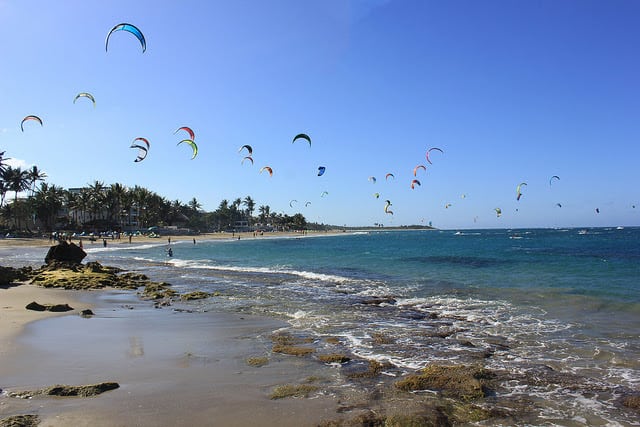
Everyone loves the idea of getting away from the winter gray and blues and escaping to a beautiful Caribbean destination, but like anywhere in the world you should do some research on your destination before booking a ticket. Get to know the weather, the tourist season and the best time of year to do the activities that interest you. Here’s a crash course on when you visit the Dominican North Coast! If you want to avoid tourist and get the best deals, low season is your time to shine. From June to November the deals on local activities and housing tend to be a bit cheaper as there are less tourists around, flights are about the same price these months as January and February. Rainy season on the North Coast generally starts around November and ends in January, the rest of the Dominican Republic has regular rain fall from May to January. Here on the North Coast we are susceptible to the Atlantic Hurricane season, but thanks to the mountain range protecting us, breaking up storms that destroy other islands, we might see heavy rain and strong winds but nothing compared to our neighbours. Surfing – Encuentro Beach is just a few minutes’ drive from Cabarete and is a world class surf beach. If you’re a beginner surfer the waves are waiting for you year round, we only have a few ‘flat’ days a year, normally in June or July. Here in the Dominican Republic we experience two seasons, summer (May to September) and winter (October to April). Summer is best for beginners; waves come from the east, are about 2-3 feet with short intervals between. Experienced surfers will want to come for winter, it’s prime, world class surfing with waves hitting 4-5 feet on average and have 11-14 second intervals between then. Waves are coming from northern directions, driven here from winter storms in the United States, the long interval between waves is caused from the long distance they’ve travelled to get here. So, when you’re riding that next glorious wave, think of all the miles it has crossed building up and getting ready for you. Kite Boarding – In the early 2000’s Cabarete became a top world destination for kite boarding, with 350 windy days a year, you can always count on Cabarete to an excellent kite surfing vacationing spot. Winds are stronger in summer (May to September) hitting their peak in June and July, but any time of year is a good time to come! There are a few great kiting spots in the area, from Kite Beach (very popular, many kite schools, the full kiting experience) to Bozo Beach (often choppier waves) to La Boca (where the river mouth opens to the ocean) – all with different scenery and drawing factors. Cabarete is a prime Kiting area, with day/weekend trips close by. Extreme Hotel has you covered just in case that there’s no wind or surf. Onsite you can participate in daily Yoga, Fitness or circus classes and our organic farm, Taino Farm, is worth always a visit.
Cabarete – A Runner’s Dream

Running in Cabarete is magical. The trick is to wake up before the heat sets in – which is not that early, only 6:15 or so. I don’t think there exists a more ideal temperature to run in. Warm enough that you don’t have to start with a long sleeve on but also hot and humid enough that when you sweat, you feel like you are working. At 6:15, Cabarete is still waking up–motorcycles and cars aren’t yet flying down the road. That wouldn’t matter anyway though because the eXtreme hotel, where I am living on Kite Beach, is located next to a somewhat hidden running path – a runner’s dream! The path is a dirt road that is located 10-20 meters past the bus station where people wait to go to work west towards Sosua. The path rarely has any traffic–I have only seen a moto a couple of the many times I have run it. As someone coming from the northeast of America, it almost feels cliché how perfectly tropical it is. The path runs parallel to the ocean shore so as you run, the entire time you see flashes of the picturesque crashing turquoise waves. At this time of day, around 6:30am or so, the sunrise makes silhouettes of the palm trees. Even if you are not a runner, it is worth waking up, just to walk it once. You can chose to end the run at Encuentro beach. It is roughly 2.5 miles. A quick turn around and return to eXtreme Hotel makes it a solid 5-mile run. However, if you’re feeling up for it, you can take off your running sneakers and go for a refreshing morning swim or early surf. It is ideal for surfing because the wind speed is typically the lowest it will be all day and the crowds haven’t yet arrived. The ocean is your oyster! After a surf, swim, body surf, SUP, or whatever ocean activity you decide upon, you can wash your feet off at one of the various surf sheds along Encuentro and run back! Alternatively, if your surfing left you too tired to finish, you can always take a motoconcho (motorcycle taxi) back for 100 pesos.