
Dominoes in the Dominican

During the early afternoon, many Dominicans love nothing more than to sit in the shade with friends and beer, playing dominoes. That’s right, that game with the double-ended dotted tiles that you played as a kid! In the Dominican Republic, dominoes is taken to a new level. It is a game of intense strategy, fast-thinking moves, and expert bluffs. The Rules Dominican rules differ slightly from international dominoes rules. But the basics are the same. A dominoes set has 28 tiles, called fichas in Spanish. Each tile is white and has a configurations of black dots at each end, 1-6 dots, like a die, or a blank. So, you might have a 2-3 tile, or a 6-6. The aim of the game is to be the first to put down all the tiles in your hand onto the board. You do this by matching dot patterns to place the dominoes end to end on the board. Dominoes games usually have four players, split into two teams of two. A new turn means you can place a new tile down on the board. Your new tile has to match dots with an open space on at least one end. So, you form a chain of tiles, like 3-2, 2-4, 4-1, 1-0, etc. If you play a double (i.e. a tile with the same dot pattern on both ends, 4-4, 2-2), you place the tile across the line of dominoes to form a T shape. Some people play that you can’t play off a double. If you can’t play, you pick up a face-down tile from the pile. Scores are added up at the end of each round using the unplayed tiles leftover. Players use several different complex systems to count up the score. Sadly, they elude me at this time. I do know that dominoes games here are usually played to 200, 250 or 500 points. This takes a good few rounds to reach. The basic concept is pretty simple. It’s popular with young children. The skill comes in when players become aware of more than just what is on the board and in their hand. The intense stand-offs that ensue are no child’s play. Tile-counting tactics If you’ve heard of card counting, a similar concept is done with tiles. In dominoes, there are 7 suits: ones, twos, threes, fours, fives, sixes, and blanks. Each suit has 7 tiles: ones have 1-0, 1-1, 1-2, 1-3, 1-4, 1-5, 1-6. Your schoolroom maths is right, 7 x 7 = 49 and not 28, like the number of dominoes tiles. Some tiles overlap suits, so 1-3 is also 3-1, but they don’t repeat as there’s only one of each combination in a set of dominoes. The best players keep track of every move and pass, and learn new information about their fellow players’ hands with every turn. They count how many of each suit has been played, and use other players’ passes to figure out which tiles are likely still in the pick-up pile. Teams work together to out suits that are favourable to them, and block the other team from getting rid of their tiles. Repite, mata y tranqua A key dominoes strategy in Dominican play is ‘Repite, mata, y tranqua’ = ‘Repeat, kill, lock’. If you have many tiles of the same suit, you should keep putting down as many of them as you can. Hopefully, your teammate will notice you doing this and will play to help you keep going on that suit. Repite. If an opponent is on a roll with one suit, you can kill or block their streak by playing a suit you think might force them to pass their go. If their teammate is trying to help them continue, you have to block their moves, too. Mata. When a game of dominoes is nearing its end, timing is everything. Whoever places the game-winning tile has the chance to ‘lock’ the game, blocking remaining tiles so that no one else can play another move. You need to be alert to chances to lock the game at a time that is most favourable for your team. Tranqua. As you can see, there is a lot going on, and I’m only just grasping the very basics. Understanding the nuances of dominoes takes years of observation and practice. Dominoes in Dominican culture Dominoes is deeply embedded within Dominican culture. In a family home, there will typically be a special table dedicated to playing dominoes. The table is square and has a ridge or groove on each side for players to arrange their tiles. It also most often has a hole in each corner – that’s where your cup of beer or rum sits. Games usually take place in the hottest hours of the day, to pass the time when the searing heat makes any other activity unbearable. Because dominoes games are often played outside, they can be quite public events. Known good players may draw a crowd of friends and neighbours to their table. While games are mostly friendly, many dominoes players will play for money and some can get pretty competitive. In this way, though the games are not alike, you can imagine dominoes as the Dominican equivalent of poker. Close dominoes teammates have played together for many years, sometimes decades. Pairs can amass hundreds of hours of experience reading each other’s body language, so that they can interpret every little facial tick or gesture. The dominoes table is sociable but good players possess an intense focus. Nothing can distract them from the complicated mental juggling of tile-counting, people-reading and anticipating upcoming moves. It is even said that every action and word relates to the game somehow. Teammates might communicate through a particular way of slamming a tile down on the table or laughing. Any argument or joke could be part of their secret code of signals. You can imagine how fascinating it is to watch these games, and try to decipher what’s really going on! Why not give dominoes a go while you’re
Marine Life and Ocean Conservation in the DR

The Dominican Republic is a country rich in tropical fauna and flora. The island relies heavily on tourism to grow its economy, but the effects of tourism on the island and its coastline are beginning to show. For this reason, conservation and ecological repair are very important to the DR. How many tourists do you think would sun themselves on a beach full of plastic bottles and rubbish? Marine life is of special significance in the DR. The country is proud of the humpback whale migration spectacle that occurs every year in Samana, on the northeasterly coast. Around 3,000 humpback whales come to Silver Bank (Banco de Plata) to breed and calve between January and March. The area of Banco de Plata y de la Navidad is a 650-square-mile protected marine wildlife sanctuary, and has been so since 1986. It was the first of its kind in the Caribbean, making the DR conservation pioneers in this part of the world. A lot more needs to be done to maintain the natural balance and redress the damage done to the ocean’s ecological health by humans. Plastic Pollution Plastic poses a major threat to the stability and longevity of marine life. The DR is not yet up to speed on its recycling and waste treatment infrastructure. Broadly, there is no widespread recycling practiced, and there is a lot of single-use plastic straws, packaging and bags. You’ll also see lots of travel-sized bottles of shampoo and oils at the supermarket. As the locals’ incomes are low, they often can’t afford to buy the bigger bottle which is cheaper and less packaging per unit of product. So, they instead consume in tiny bottles, meaning a lot of plastic waste. It’s not their fault, they don’t have a choice, but it is a huge issue for the ocean. Just look at this wave of plastic off the coast of Santo Domingo. It’s crazy. The good news is that there are several international and domestic groups working to protect the beautiful ocean in the DR. FUNDEMAR The Dominican Foundation of Marine Studies (FUNDEMAR) is an NGO that works on protecting and conserving Dominican marine life. Based on rigorous scientific research, FUNDEMAR spreads the word on sustainable uses of marine resources and ecosystems. They run projects to conserve endangered marine life, including working to restore coral reefs around the shores of the DR. Check out FUNDEMAR’s website for more info and details on how you can get involved in their awesome work. The Nature Conservancy The Nature Conservancy’s work in the Dominican Republic includes promoting sustainable fishing practices, helping establish protected marine areas, and preserving coral reefs and mangroves. Educational seminars on sustainable fishing are essential to prevent the depletion of fish stocks around the island. Fishing is how many Dominicans support themselves and their families, so it is imperative that it is carried out with long-term viable methods. The Conservancy collaborates with local communities to raise awareness about invasive lionfish and the dangers they pose to marine ecosystems. Parrotfish, on the other hand, are to be protected as they are key maintainers of the coral reef. Parley for the Ocean Parley is a group of environmental activists who are making it their mission to draw attention to ocean pollution by plastic. This summer, they were working in the DR, near Santo Domingo. They made international news when they relieved the ocean of thirty tons of plastic waste in just three days. Parley have been collaborating with the local navy, military and city council, and are encouraging public workers to get involved in the clean up. More than 500 so far have been recruited for the project. Follow this link for info on how you can get involved in the DR. Their goal is in the name: they want a ‘Parley for the Ocean’, a truce to be reached between mankind and nature’s biggest ecosystem. They believe consumers and creative industries have the responsibility to push change for the benefit of the environment. Here’s a snippet from their website: ‘To succeed, we need to find ways to synchronize the economic system of humankind with the ecosystem of nature. And make environmental protection fiscally lucrative for pacesetting major companies. Parley has been created to accelerate a process of change that is already in progress. No other big movement in the history of humankind has developed faster than the environmental cause. We want to make sure we are fast enough to meet the ultimate deadline and turn the ship around before we lose a treasure we have only just started to explore and still don’t fully understand: the fantastic blue universe beneath us — The Ocean.’ Parley has an A.I.R. strategy that they hope will cause people to think more carefully about plastic: Avoid plastic where possible Intercept plastic waste Redesign the material itself Check our their very cool website for loads of resources and information. We have masses of natural beauty to be grateful for in the Dominican Republic. The ocean provides life and energy to visitors, and a livelihood for many locals. The wave of plastic sends a terrible but clear message: We cannot go on abusing the ocean. Something has to change. At eXtreme, we have worked hard to become a nearly entirely self-sustainable eco-hotel. We are trying to do our bit to use resources efficiently and contribute minimal waste. Before coming to Cabarete, please take a look at Your Caribbean Eco Trip: What to Pack for some local tips and tricks to minimise your environmental impact. Your adventure holiday will not be affected, I promise. You can sip mojitos through your reusable straw on the beach guilt-free, knowing that you’ve done your bit to help the ocean and the precious marine life beneath the surface.
How to Get to Cabarete from the Airport

Arriving at the airport in a new country can be pretty stressful, especially if you don’t speak the language and have no idea what’s going on. Fortunately, Cabarete is just 20 minutes away from the nearest major airport in Puerto Plata (POP). If you fly into POP, we can arrange a taxi to pick you up, and you could be sipping pineapple juice on the beach within a couple of hours of touching down in the Caribbean. Annoyingly, flights into Puerto Plata tend to be more expensive than into the other three Dominican airports. So, your journey to Cabarete might be a little more complicated once you arrive in the country. But, don’t worry, I promise it’s worth it when you do make it to the beach. Here’s how to get to Cabarete from the four major airports that have regular international flights from North America and Europe: Puerto Plata Gregorio Luperon (POP), Santiago Cibao International (STI), Las Americas Santo Domingo (SDQ), and Punta Cana International (PUJ). Puerto Plata (POP) There are two main options from Puerto Plata: taxi or bus. The taxi is a 20-minute ride away and will cost you around US $35, or a bit less if you manage to haggle it down. Always agree a price with the driver before getting into the taxi. Taking the bus is cheaper, but requires a bit of taxi hopping, which is perhaps not ideal if you have loads of luggage, or are getting in late at night. Your choice. The bus from Puerto Plata to Sosua will cost you around 35RD a seat, that’s less than a dollar. You have to take a taxi from the airport into the city to get to the bus depot (25 mins) and then on the other end a taxi or guagua from Sosua to Cabarete (15 mins). The main national bus companies are Caribe Tours and Metro, both have stations in Puerto Plata. Go to their websites to check the bus schedules. The buses are pretty nice: clean, air conditioned (pack a sweater!), and they even have toilets. Score! Santiago Cibao International (STI) STI airport is nearby to the DR’s second largest city, Santiago de los Caballeros, known simply as Santiago. A taxi ride from Santiago to Cabarete will take around an hour and forty-five minutes, and will cost you US $85-100. Santiago does have Uber, so you can check that out as an option. But, as Cabarete does not have Uber, the driver will not be able to charge for his journey back to Santiago, so he might charge a bit more than the app says. You can still get a good deal, though. You can also take a 2-hour bus trip from Santiago to Sosua, which costs around 100RD (US $2). Again, there will be a taxi or guagua on either side so will take around 3 hours total, but it does work out a lot cheaper. From Sosua you take a guagua or taxi, it’s only 15 min away from Cabarete. Taxis right at the airport will always charge a lot more, so consider walking out of the airport to grab a cheaper taxi from the street. Las Americas Santo Domingo (SDQ) The taxi journey from the DR’s capital city will take 4 hours and will set you back around US $200. Could be worth it if you find a really good deal on flights. But it is long. The bus ride, again with Metro or Caribe Express, from Santo Domingo to Sosua takes 4- 5 hours and costs 400RD (US $8). From Sosua you can hop again in another taxi or guagua. Please also note that the bus stops in Santo Domingo are not directly at the. You have to take a taxi from the airport to either bus depot in Santo Domingo (US $25, about 30 min.). The taxis or guaguas on either end will add up, both in time and money, but it’ll be much, much cheaper than the taxi. Punta Cana International (PUJ) This is a really long journey. I know Punta Cana looks a bit like Puerto Plata, they both start with a ‘P’, but they are on opposite ends of the country. Triple and quadruple-check your booking to Puerto Plata, if that’s your intention. Flights are getting cheaper into Punta Cana because of the touristy development that’s going on there. Make sure it’s really worth it to trek into Cabarete from Punta Cana. The taxi ride will take 5 and a half hours and will cost around US $400. It’s at least a 9-hour trip on the bus. Take a taxi from the airport to Bavaro Express Terminal, which is at the Friusa crossing in Bavaro. The 3-hour Bavaro Express bus will take you to Parque Enriquillo in Santo Domingo (400RD), where you need to taxi to the Caribe Tours or Metro terminal. Catching another 5-hour ride to Sosua will cost around 330RD. A final 15-minute taxi or slightly longer guagua will bring you into Cabarete. It’s real long. Bon voyage! If you have any concerns or questions about getting to Cabarete from any of the Dominican international airports, please feel free to contact us. The eXtreme team at reception are pros at this and will organise your transport for you, just let them know your flight details. For info on getting around Cabarete when you’re here, check out this Motoconchos, Carritos and Guaguas post.
Your Caribbean Eco Trip: What to Pack

At eXtreme, our eco-hotel is nearly entirely self-sustainable. We do our best to ensure the hotel has a minimal impact on the environment. But we do need your help. A little preparation before your trip to Cabarete can make a big difference. Read on to find out what to pack to make your stay more eco-friendly. Refillable Water Bottle In Cabarete, we all drink bottled water. This can be a bit of an adjustment if you’re not used to it. In your hotel room, we provide big reusable water tanks. But, out and about, it’s likely that you’ll end up buying a fair few plastic bottles of water. To cut down on this single-use plastic, please pack a reusable water bottle. Better still, pack one or two per person. Filling these up at the hotel will save you money and save the ocean from another tourist’s plastic. Reusable Straw On a similar note, pack a reusable straw to reduce your use of single-use plastic straws. All those mojitos and piña coladas on the beach do add up! Though we are an eco-hotel, the restaurant, and many other bars and restaurants in town, will serve you plastic straws unless you specifically request they don’t. We’ve tried to get around this problem, but many cocktail-sippers weren’t a fan of our metal straws! So, come prepared and learn the Spanish for ‘I don’t need a straw, thank you’: ‘No necesito un calimete, gracias.’ If you wave your reusable straw around, it should help get the message across! Go full island chic and pack a bamboo straw for some ultra-stylish sipping. The ocean will thank you for your efforts! Backpack or Reusable Shopping Bags Pop a few sturdy reusable shopping bags in your suitcase if you’re planning on getting any groceries while you’re in the DR. At shops and supermarkets, you’ll quickly see how many plastic bags are handed out. They generally bag everything up in plastic here. Actually, most of the time they double-bag items, as the bags are frail and tend to break. Reduce the chances of your groceries rolling around on the street AND your environmental impact by packing strong bags or backpacks. ‘No gracias, tengo mi propria bolsa’ can be a good phrase to learn. (No thank you, I have my own bag.) Ocean-friendly Sunscreen You may have heard rumour that sunscreen washing off swimmers and divers is killing the coral reef. Those rumours, sadly, are entirely true. To preserve our beautiful ocean, we need to be alert to this potential danger and be responsible travellers. Please be sure to check the label on the bottle before you buy sunscreen. Avoid products that conatin these four ingredients: Oxybenzone (very common, sometimes written as Benzophenone-3, or BP-3) Butylparaben Octinoxate (Ethylhexyl methoxycinnamate) 4-methylbenzylidene camphor (4MBC) These chemicals have been shown to harm coral, even in really tiny concentrations, like one drop in six and a half Olympic swimming pools! An estimated 6,000 – 14,000 tonnes of sunscreen wash off swimmers into the coral reef environments every year. That’s not even counting the amount that washes into the ocean from our water waste systems. Cabarete is an ocean-centred town. We love the beach and hope you will take pleasure in its beauty. Please do your bit to take care of it, too. Join the eco-tourism movement! If we all chip in and minimise the individual impact of our vacation, together we can make a difference. We will continue to research ways to make eXtreme even more eco-friendly and sustainable. But we can’t do it without you. The time commitment required from you is small. It only takes a few thoughtful choices. The stakes are high, and there’s no time like the present to join the fight against careless, wasteful tourism. Share this around, so that together we can spread the word on how to be a more responsible eco-tourist!
When is the best time to visit Cabarete?
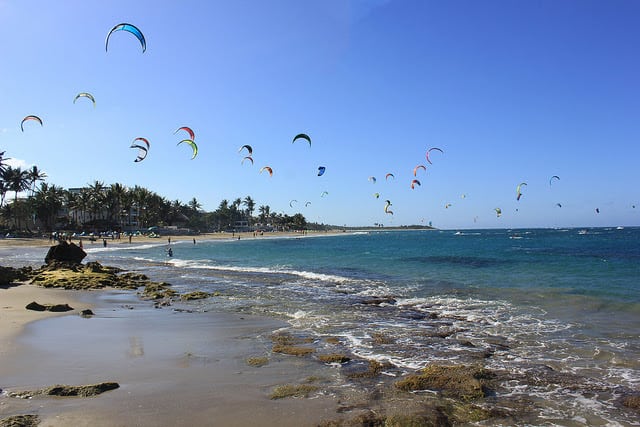
Everyone loves the idea of getting away from the winter gray and blues and escaping to a beautiful Caribbean destination, but like anywhere in the world you should do some research on your destination before booking a ticket. Get to know the weather, the tourist season and the best time of year to do the activities that interest you. Here’s a crash course on when you visit the Dominican North Coast! If you want to avoid tourist and get the best deals, low season is your time to shine. From June to November the deals on local activities and housing tend to be a bit cheaper as there are less tourists around, flights are about the same price these months as January and February. Rainy season on the North Coast generally starts around November and ends in January, the rest of the Dominican Republic has regular rain fall from May to January. Here on the North Coast we are susceptible to the Atlantic Hurricane season, but thanks to the mountain range protecting us, breaking up storms that destroy other islands, we might see heavy rain and strong winds but nothing compared to our neighbours. Surfing – Encuentro Beach is just a few minutes’ drive from Cabarete and is a world class surf beach. If you’re a beginner surfer the waves are waiting for you year round, we only have a few ‘flat’ days a year, normally in June or July. Here in the Dominican Republic we experience two seasons, summer (May to September) and winter (October to April). Summer is best for beginners; waves come from the east, are about 2-3 feet with short intervals between. Experienced surfers will want to come for winter, it’s prime, world class surfing with waves hitting 4-5 feet on average and have 11-14 second intervals between then. Waves are coming from northern directions, driven here from winter storms in the United States, the long interval between waves is caused from the long distance they’ve travelled to get here. So, when you’re riding that next glorious wave, think of all the miles it has crossed building up and getting ready for you. Kite Boarding – In the early 2000’s Cabarete became a top world destination for kite boarding, with 350 windy days a year, you can always count on Cabarete to an excellent kite surfing vacationing spot. Winds are stronger in summer (May to September) hitting their peak in June and July, but any time of year is a good time to come! There are a few great kiting spots in the area, from Kite Beach (very popular, many kite schools, the full kiting experience) to Bozo Beach (often choppier waves) to La Boca (where the river mouth opens to the ocean) – all with different scenery and drawing factors. Cabarete is a prime Kiting area, with day/weekend trips close by. Extreme Hotel has you covered just in case that there’s no wind or surf. Onsite you can participate in daily Yoga, Fitness or circus classes and our organic farm, Taino Farm, is worth always a visit.
It’s All About Kiting

It’s All About Kiting During Summer Good Wind And World Class Events Summer is just around the corner and the kiters among us (like Vikki, Chrissy and Patricia) are looking forward to the next few months! We’re lucky to have wind year round but June to September is our favorite season -time to pump up the small kites! With smaller crowds and stronger winds than the Christmas season it’s paradise for kiteboarders of all levels. Whether you’re learning or a seasoned pro it’s a good idea to make sure you’re taking care of your body after hours on the water. With that in mind we’ve put together some packages with a daily yoga class to stretch out and re-align your body as well as daily organic breakfast and dinner. Ask us about our yoga and kite camps. If you are a fitness enthusiast we have something for your too. Cabarete is packed with kiting talent, local rising stars Lou Marin and Adeuri Corniel just qualified for the 2018 youth games in Buenos Aires. Cabarete has a long history of producing pro-riders but in Summer we also get to see even more international kiting stars in the water. The Global Kite Association (GKA) is bringing their world tour to Cabarete from July 9 – 15 promising spectators an exciting World Cup event with appearances from the world’s best freestyle riders. (In case you are confused about the structure of the kiting associations, here’sa nice overview!) Uncharted Kite Sessionshosts Kite Camps with Youri Zoon, Kevin Langeree, and one Kite Camp for Ladies with world champions Jalou Langeree and Moona Whyte. This gives you the opportunity to learn from some of the best kite boarders in the world, if you want to do more than watch the pros. They base their training at GoKite/ eXtreme hotel and we’re also one of the accommodation options. We’ve seen the camps in action and can’t recommend them enough to take your kiting to the next level. Kiting isn’t just about competition and learning new tricks it’s also an amazing way to build community and find like minded people. The Butterfly Effect, an annual SUP, Windsurf, Kitesurf Event, happening July 7 is a great example. The Butterfly Effect is a global movement of non-competitive events to inspire women to stay active, learn the local culture, build community, promote sustainability, healthy living, and give back! Taino Farm With our new aquaponics system up and running the farm is producing more than ever. This Summer our products will not only be sold in Cabarete, Sosua and Puerto Plata but will also be available in La vega, Las Terrenas and possibly even Santiago- we’re one step closer to taking over the country with organic, nutrient dense food! Our Hatchery is finding a new home closer to the other aquaponics systems and we’re finally putting up some shade over the longer plant beds to keep the greens that are less happy with direct caribbean sunlight (lettuce) as healthy and happy as possible. We’re also on the verge of hiring a new Tour Manager and intern coordinator at the Farm so in the next couple of months so watch this space. We’ve been inundated with amazing applications so although we’re still sifting through them all (there’s still time to apply if you’re a bilingual agriculture enthusiast) we’re sure that whoever we end up hiring will be great and we’re very excited to add a new member to the team.