
Baseball in the Dominican Republic

The North Coast of the Dominican Republic is a haven for watersports: surfing, kitesurfing, windsurfing, skimboarding, snorkelling, diving. We have it all in Cabarete. If you’ve seen the Dominicans out on the water, you might be surprised to hear that their national sport is actually baseball. Yes, baseball! Beisbol, or more commonly just ‘pelota’, is a beloved sport in the DR. Look out for local games taking place on patches of grass, or more official uniformed matches between Dominican amateur teams. National Identity Baseball is a central part of Dominican culture. Being scouted and signed to a Major League Baseball (MLB) team can be a ticket to a new life in the US for Dominican hopefuls. These high stakes mean that baseball holds a special place in DR culture. The country is proud to cheer on Dominican talent on a world stage. Some of the best players in the history of the Major League have been Dominican. But the game also represents the need for Dominican national identity to hold its own in the face of the dominant US culture. Many MLB Dominican players make a point of showcasing their national culture proudly. They pay tribute to their home country and don’t forget their Dominican fans. Lots of the MLB stars will come home to play winter pelota in the DR, out of gratitude to their home fans. There have been times when major players have refused to give interviews in English, though they speak it well, when in their home country. It’s important for them to retain pride in DR culture, including speaking the same language as your fans at home. Fans, in turn, are generally very appreciative of the professional athletes, as they often come from small towns like their own. It’s a point of resistance to the force of US American culture to ardently support the Dominican players, even if you don’t follow the MLB team they play for. It’s about loyalty to your country and cheering your own. For a lot of Dominicans, this comes before any preference for an MLB team. If you read the local newspapers, you’ll see the focus on celebrating the success of the Dominican player, rather than getting carried away with American team rivalries. The DR Professional Baseball League The Dominican national league is called LIDOM (La LIga Profesional de Béisbol de la Republica DOMinicana). The season starts in mid-October and runs through to mid-January. The season is split into three stages, and culminates in a head-to-head battle for the national title. To start, the six teams play a schedule of 50 games from mid-October to end-of-December. Then, the top four teams will play another 18 games each from end-of-December to end-of-January. Finally, the top two teams fight it out in an intense nine-match series that determines who will be the national champions. The proud winner of the national league will represent the DR in the Caribbean Series (Serie del Caribe), against the top teams from Mexico, Puerto Rico, Venezuela and Cuba. LIDOM has six teams: Tigres del Licey: Estadio Quisqueya, Santo Domingo Leones del Escogido: Estadio Quisqueya, Santo Domingo Águilas Cibaeñas: Estadio Cibao, Santiago Toros del Este: Estadio Francisco Micheli, La Romana Gigantes del Cibao: Estadio Julián Javier, San Francisco de Macorís Estrellas Orientales: Estadio Tetelo Vargas, San Pedro de Macorís Tigres del Licey are the oldest team, founded in 1907. The Estrellas Orientales followed in 1911, and the Leones del Escogido came along in 1921. Sandino, later renamed Águilas Cibaeñas, was founded in 1937. These four oldest teams are considered the founding teams of Dominican baseball, and formed the cornerstone of the sport. Who is the best team? Well, as with all sports teams, this question is constantly debated! If we go by the figures, the Tigres del Licey have won the most national championships since LIDOM started in 1951. They are on 22, just ahead of the Águilas Cibaeñas on 21. The underdogs of the league are Gigantes del Cibao who have only won the league once ever, in the 2014-15 season. Toros del Este are second from the bottom, on two wins. Estadio Cibao is the DR’s largest stadium and seats 18,077 spectators. The DR hosted the 2008 Caribbean Series here. Get involved! Baseball games in the DR are massive cultural experiences. Even if you’re not that into sports, don’t pass on going to see a ‘juego de pelota’! You will learn a lot about Dominican culture. Plus, there’s always an after-party. Win or lose, it’s likely to be a good time. If you’re chatting to a Dominican in Cabarete, there’s a good chance they’ll follow a national baseball team. Try asking, it’s a good conversation starter!
The Butterfly Effect returns to Cabarete

The Butterfly Effect will return to Cabarete in June 2019 for a celebration of active women who love the ocean. The event will take place on the 29th June and will include SUP, windsurf and kitesurf activities. Last year in June, the BE had a blast in Cabarete. The beaches were full of Butterflies, giving it their all and having a great time in the water. The highlights were a 2km downriver SUP course from Islabon to La Boca, and a massive 5km downwinder from La Boca to Cabarete Beach. BE events have a focus on learning about local culture and giving something back. Last year, the Butterfly community helped clean up the local beaches and put on a dinner to raise money for the Cabarete charity DREAM Project. Over the years, BE has managed to donate over $45,000 to charities around the world. These funds go to important causes, like fighting breast cancer, working with at-risk young people, and supporting women who have suffered domestic and sexual violence. The women in the community are known as ‘Butterflies’. Butterflies are women who love being active and encouraging one another. When Butterflies come together in a non-competitive environment, they are free to connect with a community of adventure-loving women. Together, they learn new skills, grow in confidence and help each other navigate what femininity means to them. The Butterflies also know how to have fun. BE events always have an after-party with live music, food and plenty of dancing! About a dozen Butterflies met for the first event in Maui, Hawaii in 2007. Since then, the community has boomed, with thousands of women joining together in over 50 events. In just over a decade, the Butterflies have fluttered all over the world. 19 countries, to be precise. Locations have included Fiji, Tahiti, Melbourne, Switzerland, Morocco, Whistler, and Israel. Their mission is global women’s empowerment through watersports, and they are certainly spreading their wings. Butterfly puns aside, the BE community is doing some awesome work to promote a healthy, connected lifestyle for women. Their gatherings refuse to pit women against each other, instead they to encourage and build others up, forming lifelong friendships. Now, that’s the real prize. We can’t wait to see women of all ages coming together to do what they love on the beaches of Cabarete. Watch out for The Butterfly Effect 2019, coming to a tropical location near you!
Golf in the Dominican Republic

When you think of the Dominican Republic, your first thought might not be ‘golf destination’. But, this Caribbean island nation is fast becoming a world-class golfing hotspot. Golf champions, enthusiasts and celebrities are choosing the DR for their luxury golfing getaways. You too could tee off surrounded by spectacular tropical scenery, among the palm trees and the splashing surf, crisp sea breeze in your hair. The most popular sites for golf vacations are Casa de Campo, located on the south coast near La Romana, and Punta Cana on the easterly tip of the island. But, these are not all the DR has to offer golf-wise. There are gorgeous courses around the seaside capital Santo Domingo, in the mountainous region of La Vega, and on the north coast by Puerto Plata. In fact, the Dominican Republic boasts nearly 30 beautiful golf courses with a wide variety of vistas, both coastal and inland. Teeing off in one of the most biodiverse countries in the world is an unforgettable experience, whether it’s your first or twentieth time. Highlights include Pete Dye’s iconic Teeth of the Dog at Casa de Campo, with seven holes played so close to the coastline, you might feel the spray of the Caribbean Sea. It opened in 1971 and instantly put the Dominican Republic on the golf world’s radar. Consistently ranked as the number one golf course in the Caribbean, this masterpiece of a course should be on every globetrotting golfer’s bucket list. The second Pete Dye course at Casa de Campo is the 27-hole extravaganza Dye Fore. This is not as well known as the Dog, but the amazing mountain, river and ocean views and the impeccable conditioning make Dye Fore an absolute dream to play. The east coast Punta Cana and Cap Cana area has a range of options for resorts and courses. You might, for instance, opt for a world-class experience at the highly-acclaimed Punta Espada course. Designed by golf architect powerhouse Jack Nicklaus, Punta Espada puts up some fierce competition to Teeth of the Dog for the Caribbean’s finest golf course. The jury is still out, but there is no doubt that these are both elegant courses of the highest quality. Also in that easterly region are La Cana Golf Course (P.B. Dye) and Corales (Fazio), both very impressive and highly regarded courses. Nearer to Cabarete, on the north coast, we have the Playa Grande course in Rio San Juan, a truly unique Caribbean golfing experience. It boasts the most ocean views of any Dominican golf course, with paralysing ocean panoramas from almost any spot on the course. The last five holes are played right on the ocean, an intense end to a beautiful 18 holes. Playa Grande was designed by the legendary Robert Trent Jones Sr and is considered one of his very best works. Though it originally opened in 1997, Playa Grande was more recently renovated by RTJ’s accomplished golf architect son Rees Jones and is now back on its game. Whether you’re a pro golfer or can barely tell a 9-iron from a putter, you’ll find something for you in the golf scene of the Dominican Republic. With immaculate luxury resorts and jaw-dropping scenery, there’s no better place to play the game than right here.
SUP in Cabarete

Stand-up paddle boarding, abbreviated to SUP, is a fast-growing sport in Cabarete, and around the world. Paddlers are exploring coastlines, rivers, lakes, and even city views on their boards. More and more people are discovering the joy of SUP and the opportunities it opens up. Big paddle events are taking place left, right and centre, where a huge group goes for an epic paddle journey. This sort of thing isn’t really possible with many other sports, like surfing or . Part of the beauty of SUP is that it’s so accessible. In Cabarete, SUP is a great activity to try as a family, as kids and adults of all ages can enjoy the mellow paddle vibes on flat water. Young children can even share a big board with a parent, so you can paddle around and have fun as a team. I’ve even seen people paddling with their dogs sitting on the board! The key skill in SUP is balance. Beginners, or wobblier individuals, start on a wide, long board that should provide a stable base for your paddling. More advanced paddlers might take out a narrower board that will zip through the water a bit quicker and be more maneuverable. In Cabarete, the time for SUP is usually first thing in the morning, before the wind has picked up. When the water looks flat, calm and glassy, that’s when you’re going to want to have a paddle. Once you’ve had a little practice, paddling can be very meditative and peaceful. You might discover a deeper connection to the ocean and to your breath in the quiet. Even if you don’t feel anything too mystical, SUP is a lovely, gentle way to take in the beautiful scenery along the coast. Yogis, you might want to give SUP yoga a try! Imagine the core workout from stabilising your vasisthasana side plank on a wobbly floating board. Surfers, you could mix it up by catching some waves on an SUP. Instead of paddling lying down and popping up to get on a wave, SUP-ers guide their board through the water and onto a wave with their paddle. No pop-up needed, you’re already poised to ride that wave! There are several SUP schools in Cabarete: Vela and Cabarete Wind Sports Club are on Cabarete Beach; Method Lodge, Kite Club, and Big Willy’s Kite School are on Kite Beach. You can rent boards and talk to the experienced instructors about SUP technique, boards, where to paddle, and how to stay safe on the water. Lifejackets are provided, too. It’s important to be aware of other athletes out on the water, as you may be sharing the water with windsurfers and kitesurfers. Ideally, paddlers will be out when there is no wind, so you won’t overlap with the windsports crew. If you talk to our friendly team at reception, they will point you in the right direction for an SUP adventure. Competitive SUP Even though it seems like the most chilled out sport, SUP is growing quickly as a competitive sport. Some events require competitors to race around a buoy on flat water. Other events are more like surfing contests, where athletes are judged on the sweet waves they can catch in an alloted time. The Pacific Paddle Games takes place every year in California, and just had its fourth Games in October 2018. It feature Pro, Junior, Youth, and Open categories, so non-professional SUP-ers can compete, too. The events are split into Technical and Distance, and it gets pretty intense. Why not give SUP a go on your adventure holiday in Cabarete?
What is Kite Foiling?

Kite foiling, also known as foilboarding, hydrofoil kiteboarding, foil kitesurfing, is not as complicated as it sounds. It’s simply kiteboarding with the addition of a hydrofoil under the board. The foil allows you to kite along above the surface of the water. Kite foiling is speedier, as the foil cuts through the water with minimal drag. Foil fans love the quiet experience of riding along elevated above the surface of the water. You can have a smooth ride, even when it’s choppy out. The hydrofoil itself is not a new invention.The technology has been around lifting boats since the early 1900s. Kite foiling has been around since the beginning of kitesurfing’s short history, but has been receiving more attention lately because of its use by pro kiters. I have to admit, it does look cool. How does a hydrofoil work? Without getting too deep into the physics of it, a hydrofoil is shaped in such a way that water rushing through it gives it upward lift. While this looks crazy and futuristic, it’s the same technology that gives aeroplanes lift. A plane’s wings are curved and tilted so that air passes over it faster than under it. This causes a decrease in pressure of the air above the wing, and, as a result of the pressure difference, upward lift is generated. The plane can take off or move higher in the air. This relies on Bernoulli’s principle in fluid dynamics, which states this counterintuitive pressure/speed relationship. In a hydrofoil, the same thing is happening, only in water. The hydrofoil cuts the water and forces water to flow faster over the foil than under it, causing the pressure change that gives your boat or board lift out of the water. The faster you go, the more lift the foil generates. For foil kiters, this translates to a water start where you begin to levitate as you gain speed and the foil works its lift magic. It’s a pretty crazy sensation. Some even say it feels like flying. Kite foiling takes a bit of learning, even if you’re a good kiter. Be patient and commit to learning it as you would any other new thing. Expect to look like a beginner again and have some wipeouts. While you can ride a foil with straps, many recommend going strapless to avoid injuring yourself if the foil is diving down or behaving unpredictably. Beforehand, you might practice on a foil-less board strapless to gain confidence. You’ll need to put more weight in your front foot than you’re used to. As well as pushing with it, you need to lean your weight forward. It’s far better to nose-dive with a foil than have it jump up behind you. You also need to put pressure on your toes to keep the board flat. Try not to edge with your heels too much. A great thing about foiling is that you can ride in light wind conditions. When you’re learning, though, it’s best to start with plenty of wind to keep your kite stable in the air, but don’t overpower yourself. Maybe take a kite size down from what you would normally take in that wind. Most of all, have fun and enjoy the crazy flying sensation that kite foiling offers!
Why Cabarete is THE couple’s vacation destination
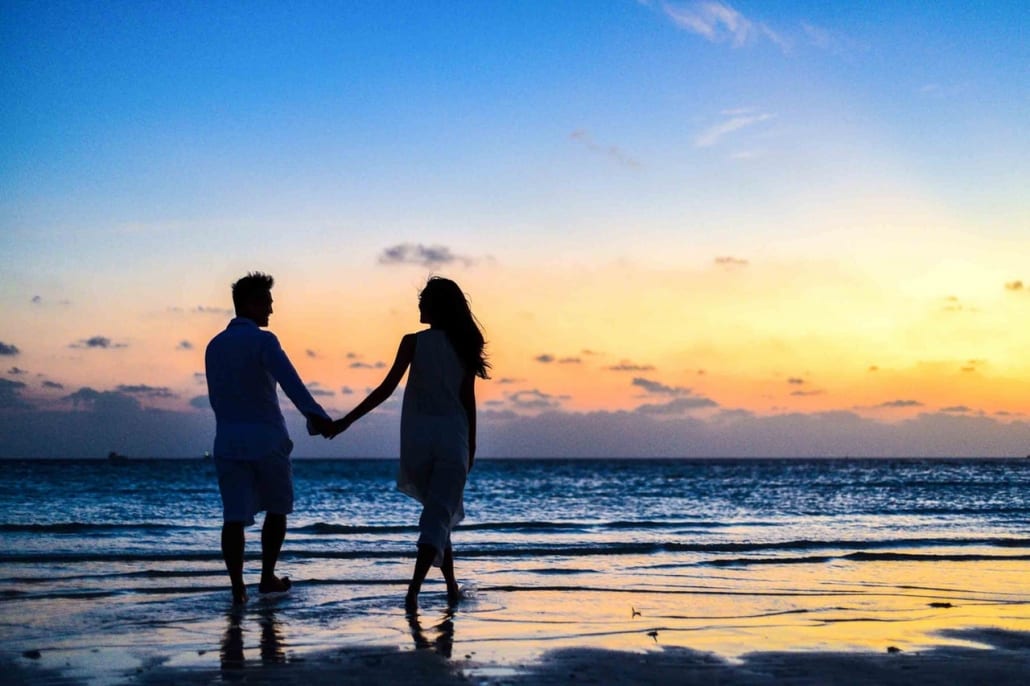
You finally find the time to escape the bustle of everyday life and work with your significant other. You rejoice at the thought of all that quality time together. And on a postcard-perfect beach, no less. Cabarete is the vacation destination for couples. Why? Because there are so many different activities in one place, you won’t be able to get sick of each other! I’m kidding, of course. But, on a relaxing couple vacation, some independent activities can be a blessing. In Cabarete and especially at eXtreme Hotel, there is no shortage of options. For him, there’s yoga, kitesurfing, circus skills. For her, there’s surfing, scuba diving, the fitness gym. At eXtreme, we have so much onsite that you can be doing your own thing mere steps from your significant other. You can even give them a wave. And importantly, you can easily meet up for a post-workout feast at our onsite restaurant, La Mesa Taina. (The sushi is spectacular.) Onsite, we have a beachfront yoga studio, a flying trapeze (among other circus toys), and a fitness gym with weights and twice-daily classes. The hotel backs onto Kite Beach, where you could take a kitesurfing lesson, jog along the beach, sunbathe, go stand-up paddleboarding, or have a swim in the warm sea. Sun salutations on the sand, anyone? For those days when your interests do overlap, there’s plenty of fun to be had together in Cabarete. Take in the mountainside on horseback, hike up hills, discover ancient caves, snorkel. If you’re into tropical fruit or sustainability, our aquaponic farm is a great one to have on your vacation itinerary. Taste exotic fruit you pick right off the tree, and experience new flavours and textures. Learn about Taino Farm’s permaculture-inspired processes and see it working to give us delicious organic produce! The farm tour ends with a relaxing float down the river on a ribber dingy, and Dominican food. In the evenings, Cabarete is full of fun and romance. There’s always something interesting going on in this chaming town, be it karaoke, Latin dancing, or a night market of local artisans. At the end of an active day, nothing beats a stroll on the beach to watch the sun go down. I’m in love just thinking about it. Cabarete is the place to be for an adventure-seeking couple. Book your active vacation at eXtreme and get the most out of your trip. See you there!