
Your Guide to Pizza in Cabarete (Part 1)

It’s fair to say that I like pizza. In fact, I’m so into it that I decided to conduct a pizza tour of Cabarete to find the best pizza in town. With the help of my trusty (and all-too-willing) partner, I went about my mission. Since there was far too much pizza to fit in one post, here’s part 1 of my round-up of Cabarete’s pizza places. La Chabola La Chabola is probably my favourite pizza place in Cabarete. The pizza itself is not super fancy, but it’s so delicious and always hits the spot. It has a gorgeous homemade, rustic feel, with tasty flour-dusted dough and yummy toppings. You can watch the guys making it at the back in their fiery stone oven. La Chabola is a super chill place to be, think low-set sofas with cushions to lounge on and low lighting. They are known to play great music, which is always a plus. Wednesday is open mic night, so you can boogie along to some live tunes while you wait for your pizza. Find it down the Callejon de la Loma, a little way, on the right. Cheap drinks likely affect my judgement but, even while sober, this pizza is great! Did I mention it’s 2 for 1 on pizzas EVERY NIGHT? What am I still doing here? Pizza and Spaghetti House At a glance, this place can look small and unassuming, but don’t be fooled. When you go in, the restaurant opens out into a pretty fancy affair. Picture white chairs and tablecloths, tasteful wood-decked floors, flaming oven, and green plants all around. The waitress brought us complimentary bruschetta when we sat down, a nice touch, and our pizza came out unexpectedly quickly. Our sausage and red onion pizza (pictured above) was delightful. The sausage was super tasty, and the fresh basil and tomato garnish took it to another level. Thoroughly competent pizza execution. It’s on the pricier side, but the pizzas are pretty big and shareable if you’re not a huge eater. The experience is pretty classy. Closed on Tuesdays. LAX The LAX pizza will likely not blow your mind. It’s a standard nice, little pizza. Solid. But, LAX have great specials that are worth checking out, including 2 for 1 happy hour drinks and half price pizza and pasta (ask your waiter to check the offer is on before you order). It’s a top spot on Cabarete beach to chill and sip half-price mojitos as the sun goes down. It heats up later though, with much music and dancing to carry you through your evening. Pizza Antonio Another spot in Cabarete for 2 for 1 pizza is Pizza Antonio, right by Janet’s supermarket. The pizza is good, nice thin base, well-topped, and beautifully crispy from their wood oven. Antonio’s manages to be spacious and cosy at the same time. The Italian chef is quirky and super friendly, and there’s an overall chill vibe. Last time I was there, they played non-stop Michael Jackson for the duration of my stay. Magical. Ceiba Pizzeria Ceiba is a little far out, but if you like American-style pizza, piled high with toppings, it might just be worth the trek. I ordered the ‘Completa’ which, true to its name, came stacked with toppings. It was pretty much at capacity. There were tons of veggies, which is sometimes rare for pizza. Peppers, olives, and sweetcorn galore. The seating area is outside, patio-style, and it has a family vibe with dogs and kids milling around. Ceiba is in Perla Marina, a little residential neighbourhood outside the Cabarete town centre, heading out towards Sosua. It’s named after the giant trees that you will see around Perla Marina. They’re quite impressive. Stay Tuned So, we’ve come to the end of part 1, but keep your eyes pealed for part 2, when we will be continuing our pizza tour of Cabarete. Coming up, we have late-night takeout, fancy Italian fare, and a restaurant filled with aquariums. Yes, fish tanks. With fish in them. Don’t miss it.
Protect the beautiful Parrotfish!

Cabarete is blessed to be by the ocean. Located on the North Coast of the Dominican Republic, Cabarete boasts beautiful beaches, a protective coral reef, and fresh fish dinners. All this amazing nature relies on a delicate balance of wildlife that inhabits the waters. The parrotfish plays a key role in maintaining the health of the coral reef and our lush beaches. Unfortunately, the colourful parrotfish is currently an endangered species, mainly due to overfishing and being eaten by lionfish, pest of the sea. In the Caribbean, it’s common to see parrotfish or loro pop up on your dinner plate. Especially, in small beachside or roadside eateries. Indeed, many local fishermen don’t know how important the fish are, and lack awareness of sustainable fishing practices. Let’s learn some more about this remarkable fish. Sex changes and homemade pyjamas The parrotfish is quite the fluid creature. It baffles scientists with its ability to change sex multiple times over its lifetime. They hang around in schools, or harems with a dominant male. When this ‘supermale’ dies, one of the females will switch to male and assume his role! Parrotfish colouring is spectacular. Their bright colours vary dramatically within the same species, and there is a lot of overlap across species, making them a challenge to classify. They also wear pyjamas. Well, kind of. Parrotfish secrete a sort of mucus sack every night before they go to sleep. It forms a transparent cocoon around them, and we think it might help mask their smell from the prying noses of predators. Parrotfish teeth are really, really hard. They are made of fluorapatite, one of the hardest biominerals in the world. Parrotfish teeth are harder than metals like copper and silver, that’s how they can much on the reef so well! As well as generally being a cool and awesome fish, parrotfish also do some super important work for the environment. Coral and beach superheroes Parrotfish live off a diet of algae that is found in the coral reef. They have special teeth in their throat that grind up the hard coral into little bits. These bits are important to us because they make their way out of the parrotfish and onto our beaches as sand. Yes, white sand is largely fish poop. Wiggle your toes in that. Estimates vary, but parrotfish may be able to produce up to 380kg (840lbs) of sand every year. That’s a lot of beach! Beach erosion is a serious concern, and overfishing parrotfish will only put our coastlines in greater peril. Caribbean economies rely heavily on tourists flocking to their beautiful white-sand (parrotfish poop) beaches. Further loss of beach sand could be disastrous for their livelihood. Marine conservation organisations are working to protect parrotfish, as they reckon the fish are super important to the health and longevity of the coral reef. In the Caribbean, parrotfish eat sponges and algae, which helps maintain the coral reef and prevent it from being overgrown. Sort of like Nature’s underwater lawnmowers. In other words: Save the parrotfish, save the reef. Did you know? Raw parrotfish is a Polynesian delicacy, and was once considered so special it was only eaten by royals. Parrotfish get their name from their fused mouth structures that look like parrot beaks. And their pretty colours. Over to you! As a tourist on vacation in the Caribbean, you can help protect our reef and beaches by not supporting the parrotfish fishing cycle. Take care to ask in a restaurant which fish is being served, and don’t eat parrotfish (loro)! Our resident nutritionist recommends the Seafood Watch app by Monterey Bay Aquarium. It has excellent searchable information to help you make sustainable, ocean-friendly choices. A handy tool, indeed.
Lobster Season in the Dominican Republic
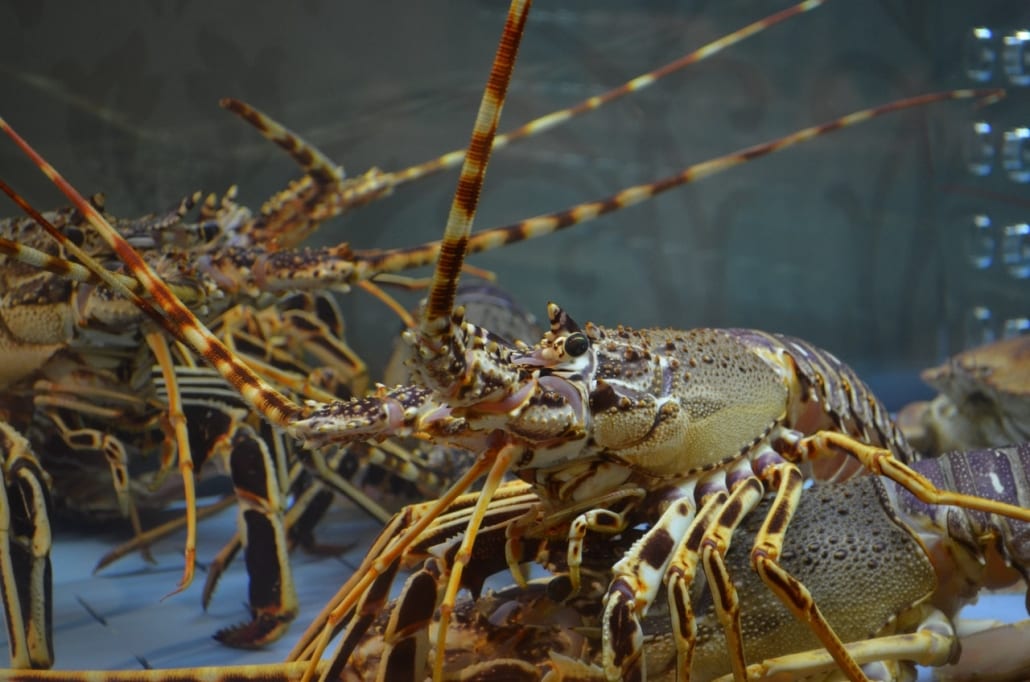
Every year, as of 2010, there is a very strict ban on fishing lobsters from March 1 to June 30. This mandatory lobster off-season had to be brought in because these poor little crustaceans are really suffering from overfishing. They need our help to bring their numbers back up to a normal and sustainable level. We need to leave them alone. March to June is lobster breeding season. With any luck, they’ll be having the time of their lives and procreating like crazy. The law prohibits fishing, capture, processing, and mass possession of lobster meat, which means it’s not okay for restaurants to serve lobster at all March through June. No one is allowed to fish more in February in preparation for the ban. Everything caught has to be consumed or thrown out within 20 days of the ban coming in. Offenders face fines of up to $50,000 USD and up to 10 years in prison. Yeah, this is serious stuff. This is a Caribbean and Central American ban to protect spiny lobsters, so it’s not just a Dominican law. For us, this means NO EATING LOBSTER. Don’t even think about it. Even if you see it on a menu and you think no one’s looking. We all have to do our bit to make sure lobster populations survive around the island. Here are some cool facts about lobsters to think about, while we can’t eat them. 1. Lobsters keep on growing their whole lives, and they may even live forever. Okay, so we don’t know for a fact that lobsters can’t die of natural causes. But, they do have a handy enzyme that protects their DNA from damage as it replicates. This means they effectively don’t age. Of course, there are lots of ways a lobster can die, like being fished, attacked by a predator, getting a horrible lobster disease. However, they may have found the secret to eternal youth. And that’s worth preserving! 2. Lobsters taste with their feet. Lobsters have tiny hairs on their legs and feet that are sensitive to chemicals. They effectively walk around until their feet detect that they’re standing on food, and then eat it. They do have antennae that can sense food from slightly further away. So, that helps. 3. Lobsters are cannibals. It’s true, lobsters eat lobsters. They roam around on the sea floor, eating fish, crabs, clams, mussels, and sea urchins. And, yes, if they’re hungry enough, they’ll eat a fellow lobby. 4. Lobsters have teeth in their stomachs. The grinding and chewing action in a lobster happens in the stomach, not in the mouth. Well, technically, food is ground up in the gastric mill. That’s a set of chompers about the size of a walnut. Amazing. 5. A lobster claw can exert 100 pounds of pressure per square inch. That’s some serious pinch. Lobsters use their big front claws, called the crusher claw, to break hard things like clam shells or mussels. They have separate ripper claws that are a bit more dexterous to tear soft fleshy parts to eat. Kind of like how we have molars to grind and canines to tear. Pinky swear Okay, so repeat after me: I will do my part to help the wonderful, tasty lobster survive. I will abstain from eating lobster from March to June. If we let the lobster have a proper, undisturbed breeding season, the populations will hopefully recover some numbers from all the damage we’ve done. Go on, I know you can do it.
Your Guide to Tropical Fruit in Cabarete

Cabarete is the place to lie on white sand, gazing up at palm trees against a blue sky, sipping a cocktail out of a pineapple. For many island folk, it’s a daily ritual. Like a cooling ocean breeze, tropical fruit never goes out of style. Fruit is Nature’s candy, and there’s nothing better than eating candy that is good for you! Tropical fruits are loaded with vitamins and minerals that have all sorts of benefits, from vital energy boosts to helping you sleep. Magic. In the hot Caribbean climate, very many exotic fruits grow in abundance. Some you may have heard of, others offer new textures and flavours to experience. Around town, it’s not difficult to spot fruit. You can shop at fruit stands, markets or from street vendors, who wander the main road and Cabarete beach with baskets piled high with goodies. Fresh fruit juice is a staple of almost every Cabarete bar or restaurant. You can drink it pure or mixed into a tasty cocktail. You only have to make it to the hotel restaurant La Mesa Taina to get your fruit juice fix. Top tip: Look out for the sweet happy hour deals on the beach! There are plenty of places that serve smoothies made from freshly blended fruit. Fresh Fresh is a classic spot to hit for a great fruity smoothie. My favourite is their Delish smoothie that comes loaded with flavours: the sweetness of the mango and orange is balanced by the invigorating ginger and mint, and some mellow cucumber. It’s quite simply Delish. Another place that serves straight fruit is Monster Juice, which you’ll find on the beach near Mojito’s. Their ice cream is out of this world and made with 100% fruit. No added sugar or any other nasties. You wouldn’t know it from the taste! They also do smoothies, frozen fruit popsicles, and refreshing coconut water with ice. If you fancy a fruit-tasting adventure a little off the beaten track, our organic aquaponic farm Taino Farm is covered in fruit trees. On a farm tour, you can learn about tropical fruit and pick them right off the tree. Freshness you can’t beat! Sample passion fruit, star fruit, guanabana, mango, zapote, limoncillo, and even cocoa beans right out of the pod! Along the way, you’ll get to know our awesome set-up, meet our fishies, and learn all about sustainable agriculture practices in a Caribbean setting. There’s also a river float adventure and a farm-to-table organic Dominican lunch in the mix. Get fruity with your vocab: aguacate: avocado arandonas: blueberries carambola: star fruit chinola: passion fruit coco: coconut frambuesa: raspberry fresa: strawberry guineo: banana guanabana: soursop limon: lemon/lime mango: mango (duh) manzana: apple mora: blackberry naranja: orange piña: pineapple sandia: watermelon uva: grape uva de mar: sea grape Now you have everything you need to go out and taste a beautiful array of tropical fruit in Cabarete. Go wild.
Local Dominican Food in Cabarete

Cabarete has a range of local eateries that serve delicious food to fuel your active vacation. Whatever the adventure, Cabarete’s local restaurants have got your back. As well as traditional Dominican food, you’ll find German schnitzel bars, tapas places, Chinese, Indian, Italian, Tex-Mex, sushi, US-style steak houses. A doner kebab shop just opened up this summer. Even with something simple like pizza, you have the pick of the town. You can head to Roma for your fancy Italian pizza and focaccia, or to Antonio’s or La Chabola for a chill-vibes local pizza bar. Of course, there’s also your standard late-night takeaway fare. With all this variety, you could almost be forgiven for not sampling any Dominican food. Almost forgiven, but not quite. Comedors are all over town. If you potter along the main road, you won’t have to walk far before finding one.You can also journey into the Callejon (Callejon de la Loma, by the traffic lights) for an immersive Dominican experience. Here’s what you need to know about typical Dominican food around town. Basics of local food The bread and butter, if you will, of local cuisine is the cafeteria-style Dominican comedor meal. It’s cheap and cheerful food, made with love and a good deal of oil. Sometimes you serve yourself, other times you are served over the counter. Expect big portions of rice, chicken and beans for just a few dollars. On that note, don’t forget to carry smaller Dominican notes to pay for meals in comedors. They won’t be too keen on you if you present a 1000-peso note for your 75RD meal. Key words when ordering Dominican food: aguacate: avocado almuerzo: lunch arroz blanco: white rice bacalao: cod. Served in comedors as a tasty, tomatoey stewed dish. berenjena: aubergine or eggplant cena: dinner chicharrón: fried pork belly or rind coco: coconut. Pretty obvious, but important in the Caribbean. desayuno: breakfast empanadas: deep-fried dough pockets, filled with chicken, cheese or sometimes curried vegetables. At 15-30RD each, empanadas are a cheap but sustaining option. Seek out these semi-circular treats early in the morning, up until around noon, from little stands on the street. Exception: the empanada guy on the beach, who wanders with his plastic box of goodies well into the afternoon. Here’s a blog about Dominican street food, where you find more details about empanadas and co. ensalada verde: green salad. It’s not super recommended that you eat this at comedors, especially if you have a sensitive stomach. frito: fried. Another important word here. guisado: stewed habichuelas: beans horneado: baked la bandera: the classic Dominican meal of baked chicken, rice, red or pinto beans and some sort of salad. Tostones and avocado, too, if you’re lucky. Called ‘The flag’ because it contains the colours of the DR flag, and is central to Dominican culture. Also referred to as ‘el plato del dia’ (dish of the day), or just ‘el almuerzo’ (lunch). Dominican Cooking mangú: mashed plátano, topped with vinegary onions. Key component of the Dominican breakfast, along with the ‘tres golpes’ (three hits or blows) of egg, cheese and salami (all fried). mofongo: mashed plátano, with garlic and chicharrón. Sometimes made with chicken, fish, or seafood. Read this article from Dominican Cooking for a fantastic Mofongo recipe! moro: spiced rice and beans papas fritas: French fries or chips pedazo: piece. e.g. un pedazo de pollo pescado: fish pica pollo: Dominican fried chicken. Crispy on the outside, juicy on the inside. A mouth-watering local staple. plátanos: plantain. Remember this word, as you’ll hear it a lot around town. Watch out for the pick-up truck filled with plátanos, blaring its sales pitch over loud speakers! Read more about the power of plátanos, and how to prepare them at home. pollo guisado: stewed chicken that falls off the bone. This deserves a special mention, as it’s what you ask for to order the standard chicken, rice, and beans lunch. puré: mash. e.g. puré de papa or puré de yuca. queso frito: fried cheese salchicha: sausage sancocho: brothy meat and vegetable soup, served with rice alongside or straight in the bowl. servicio: a serving, portion, or helping tostones: twice-fried plátano slices, Dominican equivalent of French fries. A must-try. yuca: cassava. Very widely eaten in the DR. Top tip: Watch out for diminutives, they are used all the time when talking about food. Or anything, really. So, pollo becomes pollito, pescado might be pescadito, empanadita, platanito. Don’t let it throw you, it just means ‘little’ and is an affectionate mannerism. Dominican Cooking is a great place to find recipes, if you fancy recreating your vacation comedor meals at home. The local Dominican food in Cabarete is delicious and cheap. Make sure to take note of comedor culture, while you shovel yummy rice into your mouth. Stick around for a bit, absorb the sounds and smells. The real Dominican cultural experience comes when you tune into the local banter, bop along to the bachata or merengue music, and try to master the art of not flinching at every moto horn beep.
Dominican Street Food

Wherever I go in the world, I always find myself chasing great street food. There’s something about it that’s so appealing. When I’m in a new place, I want to know what the construction workers eat for breakfast, or what the busy office worker grabs on her way into work. Or where people go to score a speedy cigarette-break snack. I like to absorb the bustle and flow of routine, and hopefully understand a little better what it’s like to live there. Food is central to cultures all around the world, it holds pride of place in social gatherings, traditions, and rituals. Since tourists are not usually invited into the private homes of local families, a great option to get a feel for the local food scene is street food. Part of the magic is that street vendors’ customers become walking advertisements. Here in the Dominican, I see locals swirling around a stand with empanadas in hand, and that’s it. I must have one. I also love eating with my hands. For me, there’s a special satisfaction at being handed a fried piece of deliciousness, all wrapped up in a napkin. Plus, I’m a sucker for instant, no-wait food (gimme gimme!). Here are some foods commonly sold on the street to look out for on your Dominican adventure: Empanadas Empanadas are my go-to Dominican street snack. I love watching the owner bundle up packages of chicken and cheese, and throw them into the pan to sizzle and seal shut. There are a couple of local men in Cabarete who wander along the beach every day selling empanadas out of a large plastic box. They cost around 25-30 pesos each and are surprisingly filling snacks. Great after a session out on the water, empanadas are an absolute must-try for your vacation. Chicharron Chicharron is a local delicacy and beloved by Dominicans. It is pork rinds or pork scratchings, basically fried pig skin, but don’t be put off by that thought. Chicharron is crunchy, salty, meaty: it really hits that savoury snack spot. You’ll see a lot of pork sold on the street in general. It’s not uncommon when driving out of townto see whole roasted pigs on a spit by the roadside. I was once on a cross-country guagua and the lady in charge stopped the bus to fill her plate with what looked like the most amazing street pork. I watched, drooling along with the rest of the bus, as the man carved the meat right in front of us for her. I only wish I’d been bold enough to ask for a plate of my own! Quipes Quipes or kipes are little fried balls made of meat and bulgur wheat. They are herby, delicious and actually very filling. Speaking of filling, they are usually made with beef, but you can find chicken, pork and vegetable quipes as well. The recipe for these tasty treats was originally brought to the Dominican by middle eastern migrants in the 1800s, chiefly from Lebanon. Kibbeh, Lebanese bulgur-based fried treats, were adopted into the Dominican cook’s repertoire and are now beloved all over the country. Pulling over for a cheeky roadside quipe on a long journey is simply dreamy. Yaniqueques Yaniqueques are crispy, flaky, deep-fried dough. They are round and flat, and come in lots of different sizes. The biggest look a bit like crunchy thin vinyl records, while little ones served with breakfast can be the size of a tea saucer. The name is a Dominicanisation of Johnnycakes, which are cornmeal flatbreads traditionally eaten everywhere on the East Coast of North America. They’re kind of like eating an empanada without the filling. Yaniqueques are delicious. Tropical Fruit On this tropical island, exotic fruits literally grow on trees. Fruits like mango, papaya, pineapple, passion fruit, banana, starfruit, limoncillo, and coconut are abundant in the Dominican Republic. They soak up all that sunshine and taste like heaven. Fruit stands offer the most natural street food for you to sample. Look out for fruterias and vendors on the beach. One common beach fruit snack are limoncillos. You can buy a little bunch for very little money, around 15-30 pesos. Limoncillos are little green balls that you squeeze or bite to pop open. You put the little fleshy ball in your mouth and scrape the fruit off the pip with your teeth. It’s quite entertaining to watch your friends’ faces as they focus on eating their limoncillo! Coconut It’s hard to justify not trying coconut on your Caribbean vacation. They are everywhere. You don’t have to look far at all in Cabarete to find someone to slice the top off a coconut for you. Sip the water straight, chip off the white flesh. It’s a beachy delight. Go, explore! If you seek it out, you will find much more Dominican street food to tickle your taste buds and ignite your sense of adventure. This list is just to get you started on your journey. Remember to exercise your common sense and avoid eating anything that looks too dodgy. So, raw meat that has been sitting in the sun for hours and is covered in flies? Maybe not. Good luck, street food wanderer!